Modi Attacks Opposition After Women’s Quota Bill Defeat, Labels Congress ‘Anti-Reform’, SP ‘Anti-Women’s Reservation’
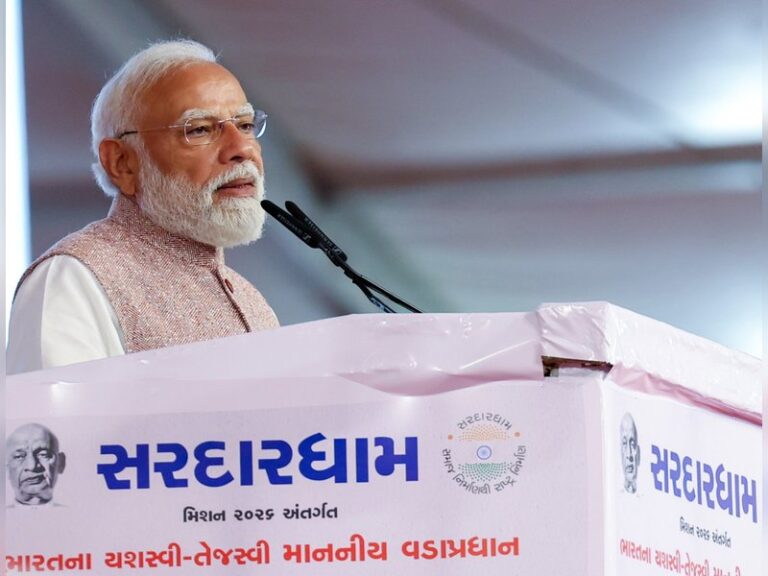
In a sharply worded address to the nation on Saturday, Prime Minister Narendra Modi launched a frontal attack on Opposition parties after the defeat of The Constitution (131st Amendment) Bill, 2026, in the Lok Sabha, accusing them of “blocking historic reform” and “betraying the aspirations of women across India.”
The Bill, which sought to operationalise women’s reservation in Parliament and state legislatures, failed to secure the required two-thirds majority on Friday, marking a rare legislative setback for the government.
In his televised address, Modi singled out the Indian National Congress, calling it “anti-reform,” and the Samajwadi Party, accusing it of being “anti-women’s quota.”
“Yesterday, the country witnessed how parties that claim to stand for social justice came together to block a transformative reform. Their actions have exposed their true intentions,” the Prime Minister said.
Opposition’s Stand: Support With Conditions
Opposition leaders, however, defended their decision to vote against the Bill, asserting that their objection was not to women’s reservation per se, but to its linkage with the contentious process of delimitation.
In a joint statement issued after the vote, several Opposition parties said they “strongly support women’s reservation” but insisted that its implementation should not be contingent on the completion of delimitation, which is expected after the next Census.
“Linking reservation to delimitation creates uncertainty and delays justice. Women’s representation cannot be held hostage to a future administrative exercise,” a senior Congress leader said.
Leaders from the Samajwadi Party echoed similar concerns, arguing that the Bill, in its current form, could “disproportionately affect representation in certain states” due to demographic variations that would emerge during delimitation.
Modi’s Counterattack
Rejecting these arguments, Modi accused the Opposition of “hiding behind procedural excuses” to stall progress.
“For decades, they spoke about women’s empowerment. But when the time came to act, they chose politics over progress. This is not just opposition to a Bill this is opposition to the dreams of India’s daughters,” he said.
The Prime Minister also framed the issue as part of a broader ideological divide, contrasting his government’s reform agenda with what he described as the Opposition’s “status quo politics.”
“Whether it is economic reform, social reform, or political reform the same forces have repeatedly tried to slow India’s march forward,” he added.
A Rare Legislative Setback
The defeat of the Constitution Amendment Bill is significant, as it is the first time in over a decade that a major constitutional proposal introduced by the Modi government has failed to pass in Parliament.
The government had hoped to build consensus around the measure, which it projected as a landmark step toward gender equality in political representation. However, the linkage with delimitation emerged as a key sticking point during debates.
Political Implications
The episode is likely to sharpen political polarisation ahead of upcoming elections, with both sides seeking to frame the narrative to their advantage.
The ruling Bharatiya Janata Party (BJP) is expected to take the issue directly to voters, portraying the Opposition as obstructing women’s empowerment. Meanwhile, Opposition parties are likely to argue that the government introduced a “flawed framework” that could delay implementation indefinitely.
Political analysts say the controversy underscores deeper tensions around representation, federal balance, and electoral arithmetic.
What Lies Ahead
Despite the setback, government sources indicated that efforts to revive the Bill or bring a modified version could be explored in future sessions, possibly after wider consultations.
For now, however, the collapse of the measure has triggered a fresh round of political confrontation, with women’s reservation long seen as a consensus issue once again becoming a battleground in India’s parliamentary politics.
About the Author