Menstrual health part of right to life, says Supreme Court; orders free sanitary pads, separate toilets in all schools
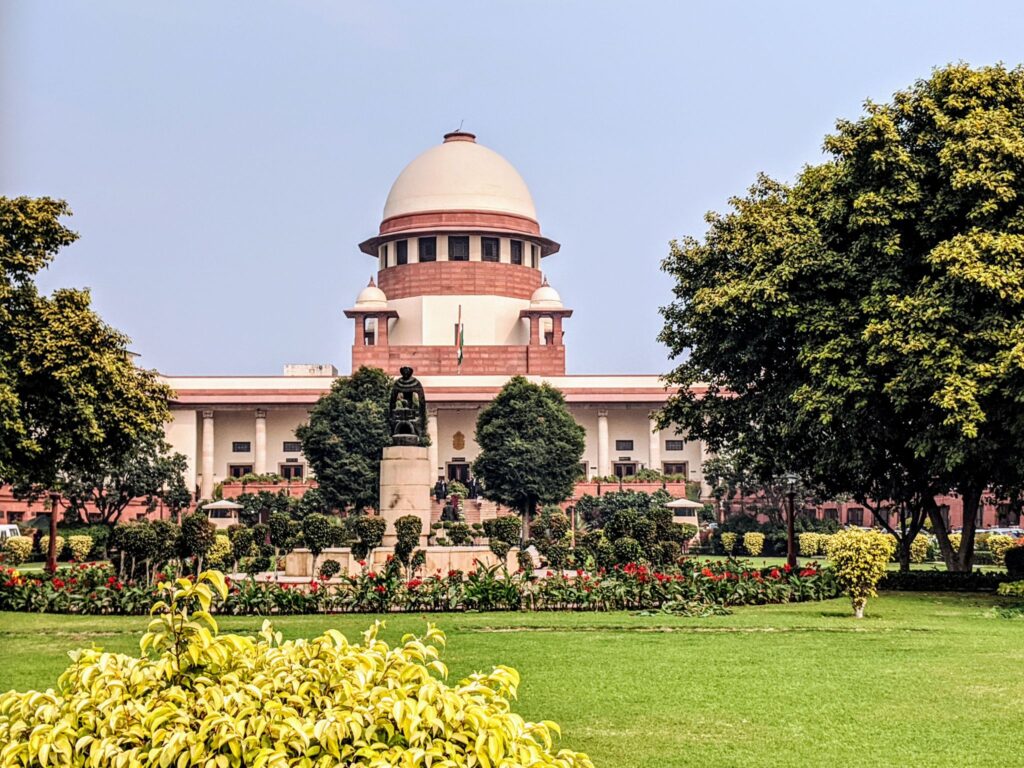
NEW DELHI: In a landmark judgment expanding the scope of constitutional protections for dignity, health and education, the Supreme Court of India on Thursday ruled that menstrual health is an inseparable part of the Right to Life guaranteed under Article 21 and directed all states and Union Territories to ensure free access to sanitary pads and separate, functional toilets for girls in every school across the country.
The apex court said the failure to provide basic menstrual hygiene facilities directly affects physical health, mental well-being, privacy and educational continuity, and therefore violates the constitutional promise of a life lived with dignity. The ruling places menstrual hygiene management firmly within the framework of fundamental rights, marking a significant shift from welfare based approaches to rights based enforcement.
Constitutional dignity and bodily autonomy
Delivering the judgment, the bench observed that menstruation is a natural biological process and that systemic neglect surrounding it has resulted in stigma, exclusion and unequal access to education for millions of students. The court held that constitutional guarantees cannot be interpreted narrowly when the absence of basic facilities compels students to miss school, suffer health complications or compromise personal dignity.
The judges noted that the right to life under Article 21 includes the right to health, privacy, bodily integrity and conditions necessary for personal development. Menstrual health, the bench said, intersects with all these dimensions and must therefore be treated as a constitutional obligation rather than a discretionary policy measure.
Mandatory directions to states and schools
In clear and time-bound directions, the court ordered all state governments, Union Territories and education authorities to ensure that free sanitary pads are made available to every menstruating student in government, aided and residential schools. The court said access to menstrual products must be reliable, regular and free of cost, particularly for students from economically disadvantaged backgrounds.
The judgment also mandates the construction and maintenance of separate, safe and functional toilets for girls in all schools. These facilities must include running water, disposal mechanisms and adequate privacy. The bench stressed that toilets that exist only on paper or remain locked, unhygienic or unusable defeat the very purpose of constitutional compliance.
Menstrual hygiene management corners
Recognising that menstruation-related needs often arise unexpectedly during school hours, the court directed the establishment of Menstrual Hygiene Management (MHM) corners in all schools. These designated spaces are to be stocked with sanitary pads, spare uniforms or clothing, disposal bags and basic hygiene supplies.
The bench said such corners would help prevent embarrassment, absenteeism and early dropouts, especially among adolescent students. It further directed that these facilities must be accessible to students with disabilities, ensuring inclusivity and equal access.
Focus on education and stigma reduction
Beyond infrastructure and supplies, the court underscored the importance of education and awareness. It directed authorities to introduce age-appropriate menstrual health education as part of school health programmes. Importantly, the court recommended that awareness sessions should involve both girls and boys, stating that silence and misinformation around menstruation perpetuate discrimination and shame.
The bench observed that normalising conversations around menstrual health is essential to dismantle entrenched taboos and to create a supportive school environment. Teachers, school staff and counsellors were advised to receive appropriate training to handle menstruation-related issues sensitively and responsibly.
Environmental and health safeguards
Addressing concerns related to waste management and sustainability, the court advised that sanitary products supplied in schools should meet safety and quality standards and, where feasible, be environmentally responsible. Schools were directed to put in place safe disposal systems to prevent health hazards to students and sanitation workers.
The bench cautioned against improper disposal practices that could harm public health or the environment and emphasised that menstrual hygiene management must be integrated into broader sanitation planning.
Monitoring and accountability
To ensure that the directions are not reduced to symbolic declarations, the court ordered states and education departments to submit implementation plans and periodic compliance reports. It warned that persistent failure to comply could invite strict action, including consequences for private institutions that ignore mandatory norms.
The court made it clear that financial constraints cannot be cited as an excuse to deny fundamental rights. It directed coordination between central and state authorities to ensure uniform minimum standards across regions, regardless of local administrative challenges.
Addressing educational inequality
The judgment took note of data and submissions highlighting that lack of menstrual hygiene facilities is a major contributor to school absenteeism and dropouts among adolescent students. The court observed that denying students the means to manage menstruation safely effectively excludes them from education and undermines constitutional commitments to equality and opportunity.
By linking menstrual health to educational access, the bench reinforced the idea that social infrastructure is as critical to learning outcomes as classrooms and teachers.
Reactions from civil society and experts
Public health experts and child rights advocates welcomed the ruling, calling it a transformative step toward menstrual equity. Activists said the judgment provides legal backing to long-standing demands for universal access to menstrual hygiene facilities in schools and could significantly improve retention and attendance rates.
Legal analysts described the decision as part of a broader judicial trend that recognises socio-economic conditions as integral to fundamental rights. By placing menstrual health within Article 21, the court has elevated it from a policy concern to a constitutional mandate.
Challenges ahead
While several states already operate schemes providing sanitary pads or improving school sanitation, implementation has often been uneven due to supply gaps, maintenance issues and lack of monitoring. The court acknowledged these challenges but said inconsistency cannot justify continued rights violations.
Experts cautioned that effective execution would require sustained funding, local level oversight, community participation and transparent audits. Without these, they warned, the promise of the judgment could remain unrealised.
A rights-based shift
The ruling marks a decisive shift in how menstrual health is viewed within India’s constitutional framework. It affirms that dignity cannot be compartmentalised and that the state’s obligation extends beyond survival to ensuring conditions that allow individuals to live with respect, autonomy and equality.
For millions of students, the court’s directions hold the promise of uninterrupted education, improved health and the simple assurance that a natural biological process will no longer be a barrier to learning or dignity.
The Supreme Court said it will continue to monitor compliance and retains jurisdiction to ensure that its directions are implemented in letter and spirit, signalling that menstrual health is no longer a matter of charity, but a matter of constitutional right.
About the Author