India, EU Sign Landmark Security and Defence Pact, Expand Strategic Ties
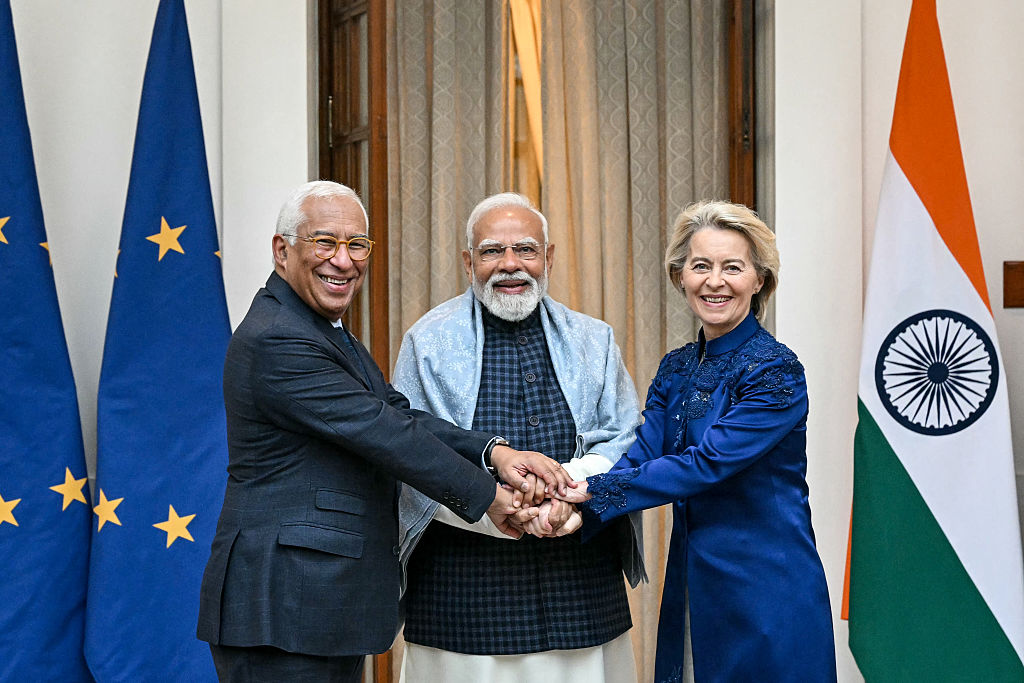
NEW DELHI, Jan 27 — India and the European Union on Tuesday took a decisive step toward deepening their strategic partnership by signing a comprehensive Security and Defence Partnership, alongside a set of parallel agreements aimed at expanding trade, technology cooperation and supply-chain resilience. The accords were finalised during a high-level summit in New Delhi, underscoring a growing convergence between New Delhi and Brussels amid shifting global security and economic dynamics.
The Security and Defence Partnership establishes an institutional framework for sustained cooperation in areas ranging from counter-terrorism and maritime security to cyber defence and defence-industrial collaboration. Officials on both sides described the pact as a milestone that elevates India–EU ties beyond dialogue into operational cooperation, while preserving India’s policy of strategic autonomy and the EU’s multilateral approach to security.
What happened at the meeting
The summit brought together senior political leadership, foreign and defence officials, and key ministers from both sides. Discussions focused on the deteriorating global security environment, the need for resilient supply chains, and the importance of upholding international law, including freedom of navigation and respect for sovereignty.
According to officials briefed on the talks, both sides agreed that cooperation must move beyond statements to practical outcomes. The meeting featured detailed deliberations on maritime security in the Indian Ocean region, information-sharing mechanisms to counter terrorism and extremism, and collaboration on emerging security domains such as space and cyberspace.
The leaders also reviewed ongoing regional and global conflicts and agreed that closer coordination between India and the EU would contribute to stability, particularly in the Indo-Pacific. While the discussions avoided references to military alliances, they reflected a shared assessment that security challenges today are transnational and require coordinated responses.
Key features of the security and defence pact
The Security and Defence Partnership provides for regular consultations at the political and senior-official levels, enabling structured dialogue on security priorities. It envisages cooperation between armed forces through joint exercises, exchanges of best practices and training initiatives, especially in areas such as maritime domain awareness and humanitarian assistance and disaster relief.
A significant element of the pact is defence-industrial cooperation. The agreement seeks to encourage collaboration between Indian and European defence manufacturers, promote joint research and development, and facilitate participation of Indian companies in European defence supply chains. Officials said this could help India access advanced technologies while offering European firms a reliable manufacturing and innovation partner.
Cyber security and counter-terrorism form another pillar of the agreement. The pact outlines cooperation on preventing cyber threats, protecting critical infrastructure and countering online radicalisation. Both sides committed to sharing expertise and coordinating responses to cyber incidents, reflecting growing concerns about digital vulnerabilities.
Other pacts and agreements
Alongside the security accord, India and the EU announced the conclusion of negotiations on a long-pending Free Trade Agreement (FTA), marking one of the most consequential economic developments in their relationship. The FTA aims to significantly reduce tariffs on goods traded between the two economies, expand market access for services and create more predictable rules for investment.
The agreement is expected to benefit a wide range of sectors. European exporters are likely to gain improved access for automobiles, machinery, chemicals and high-value consumer goods, while Indian exporters are poised to benefit from lower duties on textiles, pharmaceuticals, gems and jewellery, and agricultural products. Officials said the FTA also includes provisions on sustainability, labour standards and dispute resolution.
In addition, the two sides signed cooperation agreements in clean energy, climate action and research and innovation. These include commitments to accelerate renewable energy deployment, collaborate on green hydrogen and support joint research projects under existing scientific frameworks. A renewed push was also announced for the Trade and Technology Council, which will oversee cooperation on semiconductors, artificial intelligence and digital public infrastructure.
Strategic and economic impact
The security and defence partnership is expected to reshape how India and the EU engage on strategic issues. For India, the pact offers access to European expertise and technology without binding commitments, aligning with its preference for issue-based partnerships. It also supports India’s ambition to strengthen domestic defence manufacturing by integrating with global supply chains.
For the EU, closer defence cooperation with India provides an opportunity to diversify partnerships and enhance its presence in the Indo-Pacific. European policymakers see India as a stable, like-minded partner capable of contributing to regional security and balancing disruptions in global defence supply chains.
Economically, the FTA is projected to boost bilateral trade and investment flows over the medium to long term. Analysts expect trade volumes to rise as tariff barriers fall and regulatory cooperation improves. The agreement could also encourage European companies to expand manufacturing and sourcing operations in India, while Indian firms may find it easier to invest and operate across European markets.
Industry and expert reactions
Industry groups on both sides welcomed the announcements, calling them timely and forward-looking. Defence analysts noted that while the security pact sets an ambitious agenda, its success will depend on implementation, regulatory alignment and the ability of companies to translate policy intent into joint projects.
Trade experts highlighted that the FTA’s real impact will hinge on how quickly tariff reductions are phased in and how effectively non-tariff barriers are addressed. They also cautioned that domestic political processes in EU member states and India could influence timelines for ratification.
The road ahead
Both sides agreed to establish monitoring mechanisms to track progress and resolve implementation challenges. Legal and parliamentary procedures will follow before the agreements fully enter into force. Officials said early wins would be pursued through pilot projects in defence collaboration, clean energy and technology cooperation.
The summit concluded with a clear message: India and the European Union see each other as long-term partners in an increasingly complex world. By combining security cooperation with economic integration and technological collaboration, the two sides aim to build a resilient partnership capable of addressing both present and future challenges.
As the agreements move from paper to practice, their true significance will be measured by tangible outcomes from joint defence projects and secure digital networks to rising trade flows and shared innovation. For now, the signing of the security and defence pact marks a turning point in India–EU relations, signalling intent to move decisively toward a more strategic and comprehensive partnership.
About the Author