EU Refused to Impose Tariffs on India Over Russian Oil to Safeguard Major Trade Deal: Scott Bessent
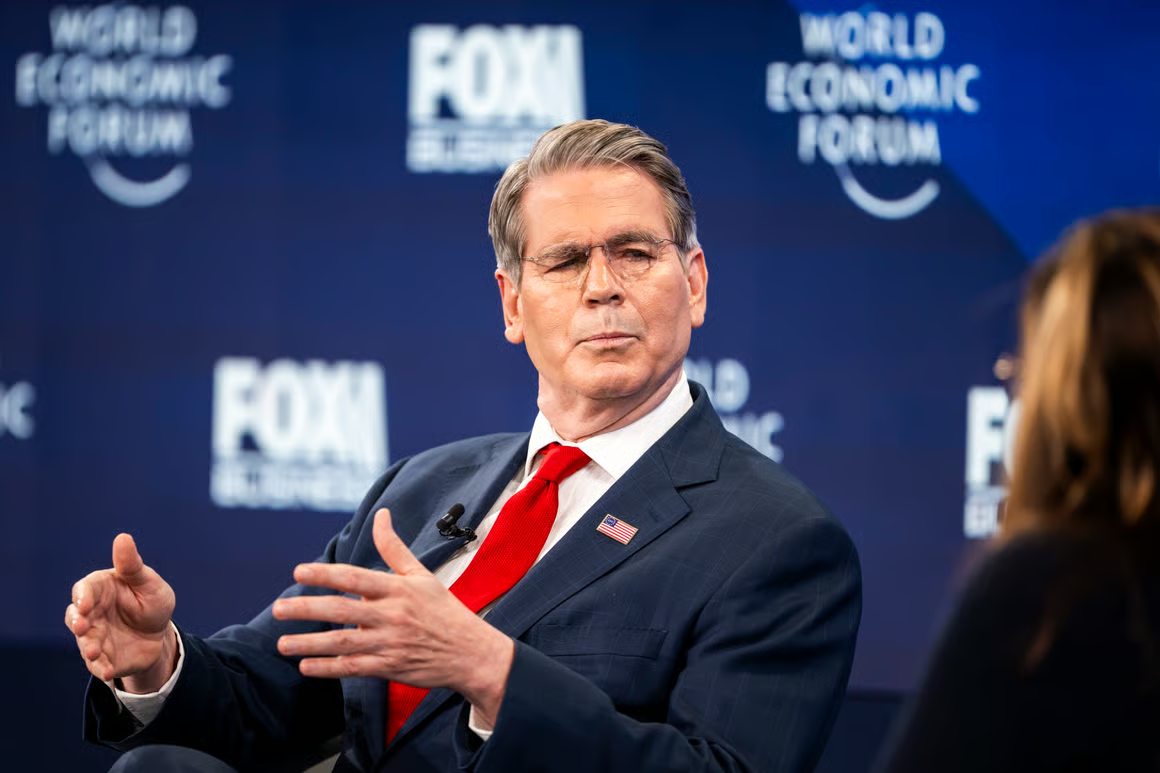
The European Union has declined to impose trade tariffs on India over its continued purchase of Russian crude oil, prioritising a large and strategically important trade agreement with New Delhi, according to remarks by Scott Bessent, the US Treasury Secretary.
Bessent said the EU’s decision highlights a divergence in approach among Western economies toward India’s energy ties with Russia, at a time when geopolitical pressures and economic interests are increasingly intersecting. His comments come amid ongoing negotiations for a comprehensive free trade agreement between European Union and India, a deal expected to significantly expand bilateral trade and investment.
Trade Deal Takes Priority
According to Bessent, European policymakers opted against punitive tariffs because of the scale and long-term importance of the proposed trade pact with India. The agreement is expected to cover goods, services, digital trade, and investment protection, making it one of the EU’s most ambitious trade negotiations with a major emerging economy.
“The Europeans chose not to move forward with tariffs because they are focused on closing a very large trade agreement with India,” Bessent said, underlining how commercial considerations can shape policy decisions even during periods of global tension.
India’s Russian Oil Purchases
Since the outbreak of the Ukraine conflict, India has sharply increased imports of discounted crude from Russia, citing energy security and affordability for its growing economy. While Western nations imposed sweeping sanctions on Moscow, India maintained that it was not bound by unilateral restrictions and would act in its national interest.
The EU, despite being one of the strongest backers of sanctions against Russia, has stopped short of directly penalising India for these purchases. Officials in Brussels view India as a critical economic and strategic partner, particularly as global supply chains shift and Europe seeks to diversify trade away from over-dependence on China.
Contrast With US Policy
Bessent contrasted the EU’s stance with that of the United States, which has taken a tougher line by using tariffs as leverage to discourage Russian oil trade. He said Washington viewed such measures as an effective tool to influence behaviour, while acknowledging that allies have adopted different methods.
The remarks underline growing differences within the Western alliance on how to balance sanctions enforcement with economic diplomacy, especially when dealing with large non-aligned economies such as India.
Strategic Calculations in Brussels
For the EU, the trade negotiations with India carry long-term strategic value. India is among the world’s fastest-growing major economies and a key market for European exporters ranging from automobiles and machinery to luxury goods and green technologies.
European officials believe that imposing tariffs could derail years of negotiations and weaken the bloc’s economic footprint in South Asia. Instead, Brussels has chosen engagement over confrontation, betting that deeper economic ties will yield greater influence over time.
India’s Position
Indian officials have consistently argued that energy imports are driven by market conditions and domestic needs, not geopolitical alignment. New Delhi has also pointed out that several European countries continued economic exchanges with Russia even after sanctions were introduced.
The EU’s decision not to impose tariffs has been seen in New Delhi as a pragmatic acknowledgement of India’s strategic autonomy.
Outlook
As trade talks move toward their final stages, the EU’s refusal to penalise India over Russian oil reflects a broader reality: economic interests are increasingly shaping global diplomacy. Bessent’s comments suggest that while Western nations remain united in principle on sanctions, their execution varies based on national and regional priorities.
The outcome of the India-EU trade deal could set a precedent for how major economies manage political differences while pursuing long-term economic partnerships.
About the Author