Youth at the Helm: What BJP’s Youngest National President Signals for Indian Politics
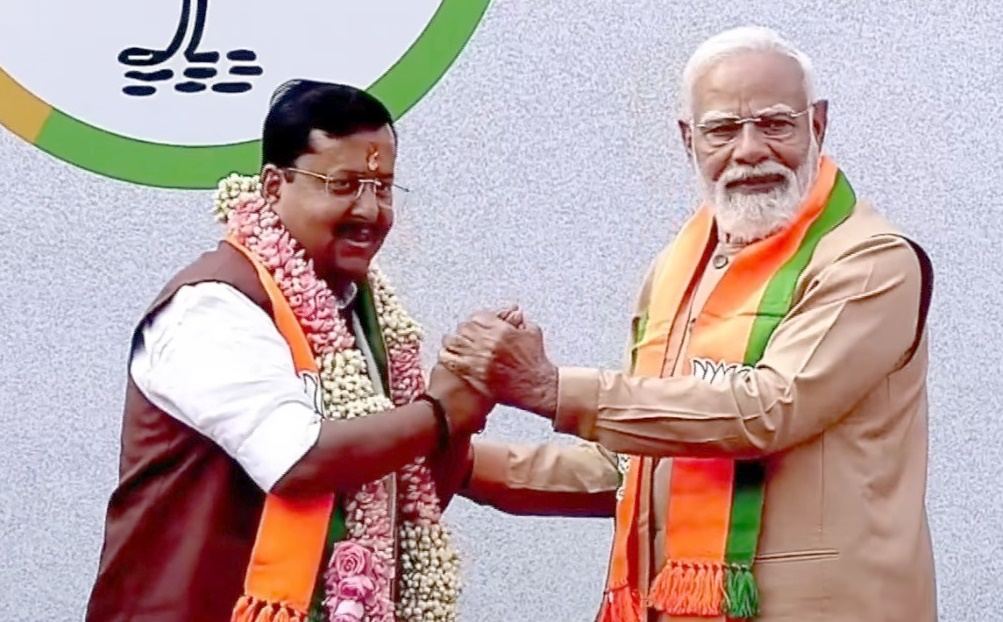
The appointment of a new national president by the Bharatiya Janata Party, and his distinction as the youngest party chief not only in the BJP’s history but across India’s major political formations, marks more than a routine organisational change. It reflects a carefully calibrated political signal one that blends continuity with adaptation in an era of shifting voter expectations, generational change, and evolving political communication.
In Indian politics, leadership transitions are often conservative, favouring seniority, legacy, and long-standing political capital. Against this backdrop, the BJP’s decision to elevate a comparatively young leader to its highest organisational post invites closer analysis. Is this merely symbolic, or does it point to a deeper transformation in how political power is being structured and projected?
A Break from Tradition, Not from Control
At first glance, the appointment appears to challenge the established norm of senior leaders dominating party hierarchies. However, a closer look suggests that the move is less about disrupting the existing power structure and more about repackaging it for a changing electorate.
The new national president is not an outsider, nor a sudden political phenomenon. His rise has been gradual, institutionally rooted, and closely aligned with the party’s organisational culture. This ensures that while the face of leadership is younger, the ideological and strategic continuity of the BJP remains intact. In that sense, the transition is evolutionary rather than revolutionary.
Reading the Demographic Signal
India’s electorate is young, urbanising, and increasingly aspirational. Political narratives built solely on legacy leadership risk losing resonance with first-time voters and digitally native citizens. The BJP’s choice of a younger national president can therefore be read as a demographic response, not just an organisational decision.
This move allows the party to project relevance without abandoning experience. The symbolism matters: it conveys that political advancement is possible without waiting decades for seniority to accumulate, provided one demonstrates organisational loyalty and electoral effectiveness.
For opposition parties, many of which still rely heavily on aging leadership structures, this shift may intensify pressure to rethink succession planning.
Organisational Leadership vs. Mass Leadership
It is important to distinguish between organisational authority and mass political leadership. The role of a national party president is not primarily about public charisma, but about managing a complex political machine coordinating state units, supervising election strategies, resolving internal conflicts, and ensuring ideological discipline.
From that perspective, age becomes less significant than administrative competence and organisational trust. The BJP’s choice suggests confidence that its youngest president possesses the institutional maturity required to manage a party that spans diverse regions, social coalitions, and political interests.
Strategic Timing and Political Messaging
The timing of the appointment is politically significant. With multiple electoral contests on the horizon and a competitive national narrative taking shape, the BJP appears keen to reinforce its image as a party that is forward-looking rather than status quo-driven.
At the same time, the move helps counter opposition criticism that the BJP’s leadership ecosystem is overly centralised or resistant to generational change. By showcasing youth at the organisational helm, the party strengthens its argument that internal mobility and merit continue to matter.
Expectations and Constraints
While symbolism works in the short term, the real test lies in execution. The youngest national president now faces expectations on several fronts:
Youth engagement: His age naturally invites expectations of stronger outreach to students, young professionals, and first-time voters.
Internal balance: Managing ambitions within a large party requires authority, negotiation skills, and the ability to balance regional aspirations.
Electoral performance: Ultimately, organisational leadership is judged by election results, not optics.
However, it would be unrealistic to assume that age alone will translate into policy innovation or ideological shifts. The BJP’s central decision-making framework remains firmly in place, and the national president’s role operates within those boundaries.
What It Means for Indian Politics
Beyond the BJP, this appointment may influence how other parties think about leadership renewal. While not all parties share the BJP’s organisational depth or cadre structure, the message is clear: generational stagnation carries political cost.
The elevation of a younger leader does not automatically democratise politics, but it reshapes perception an increasingly critical currency in modern electoral competition. In an age where political communication travels instantly and symbols often precede substance, perception can shape momentum.
Continuity Disguised as Change?
Critics may argue that the move represents continuity dressed up as generational change. That assessment is not entirely unfounded. The new president’s ideological alignment and institutional grooming suggest that policy direction will remain largely consistent.
Yet, even symbolic change has consequences. It affects how parties are seen, how cadres are motivated, and how voters interpret intent. In politics, symbolism often lays the groundwork for structural shifts over time.
Conclusion: A Calculated Political Statement
The appointment of the youngest national president in the BJP’s history is best understood as a calculated political statement rather than a dramatic departure from tradition. It reflects the party’s awareness of demographic realities, its confidence in organisational grooming, and its ability to adapt presentation without unsettling control.
Whether this generational shift leads to deeper transformation will depend on how leadership authority is exercised and how effectively expectations are managed. For now, the move underscores a broader truth about Indian politics: change, when it comes, often arrives incrementally wrapped in continuity, but carrying signals that the system is learning to adapt.
About the Author