Supreme Court Denies Bail to Umar Khalid: A Legal Analysis of Pre-trial Detention and UAPA Benchmarks
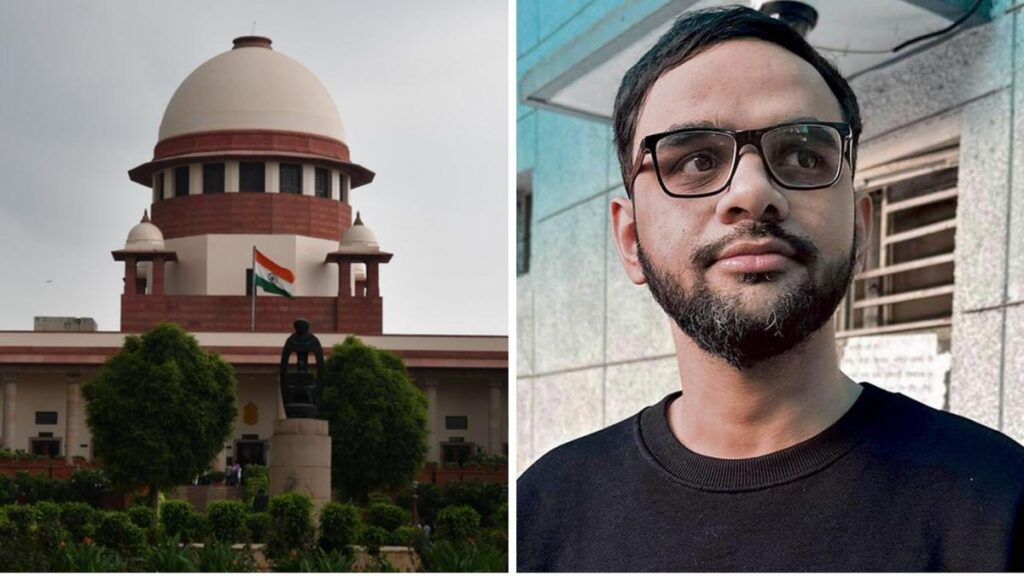
On January 5, 2026, the Supreme Court of India delivered a pivotal judgment in the 2020 Delhi Riots “larger conspiracy” case, refusing bail to former student leader Umar Khalid and activist Sharjeel Imam. The ruling, delivered by a bench of Justices Aravind Kumar and NV Anjaria, marked a significant moment in a legal battle spanning over five years. While the court maintained the incarceration of Khalid and Imam, it simultaneously granted conditional bail to five other co-accused: Gulfisha Fatima, Meeran Haider, Shifa Ur Rehman, Mohammad Saleem Khan, and Shadab Ahmed.
The judicial reasoning for this split decision rested on what the bench described as a “qualitatively different footing” and a higher “hierarchy of participation” attributed to Khalid and Imam. In its detailed order, the Supreme Court clarified that the prosecution’s material disclosed prima facie allegations against these two individuals that met the stringent statutory threshold for the denial of bail under Section 43D(5) of the Unlawful Activities (Prevention) Act (UAPA). The court emphasized that the evidence including alleged inflammatory speeches and technical data suggested a central role in orchestrating the conspiracy that led to communal violence in February 2020, resulting in 53 deaths.
Central to the court’s deliberation was the tension between Article 21 of the Constitution, which guarantees the right to personal liberty, and the mandates of the UAPA. The defense argued that Khalid’s five-year pre-trial detention without the commencement of a trial constituted a violation of his fundamental rights. However, the bench noted that while prolonged incarceration is a factor, it does not operate as an automatic “trump card” to override statutory safeguards when allegations involve national security. The court stated that the UAPA represents a “legislative judgment” on bail conditions that the judiciary must respect through a “structured enquiry.”
The Supreme Court accompanied the release of the five co-accused with rigorous legal conditions to ensure their availability for trial and prevent justice from being obstructed. Key mandates include the surrender of all travel documents and a strict prohibition on leaving Delhi without prior judicial permission. To monitor their movements, the court required the accused to report twice weekly to their local police station and maintain an active mobile phone with continuous GPS “Live Location” sharing enabled for the Investigating Officer.
Beyond physical movement, the court established clear boundaries regarding their public and private conduct. The accused are strictly forbidden from contacting witnesses or attempting to influence evidence, with any violation leading to an immediate revocation of bail. Additionally, a judicial gag order was imposed, restraining them from making any public statements or social media posts regarding the merits of the case while it remains sub-judice. These measures reflect the court’s attempt to facilitate personal liberty while maintaining intensive state supervision.
Despite the denial of bail for Khalid, the Supreme Court provided a prospective window for relief. The bench directed the trial court to expedite the examination of protected witnesses and stated that Khalid and Imam are at liberty to file fresh bail applications after one year or upon the completion of these witness examinations whichever occurs earlier.
About the Author