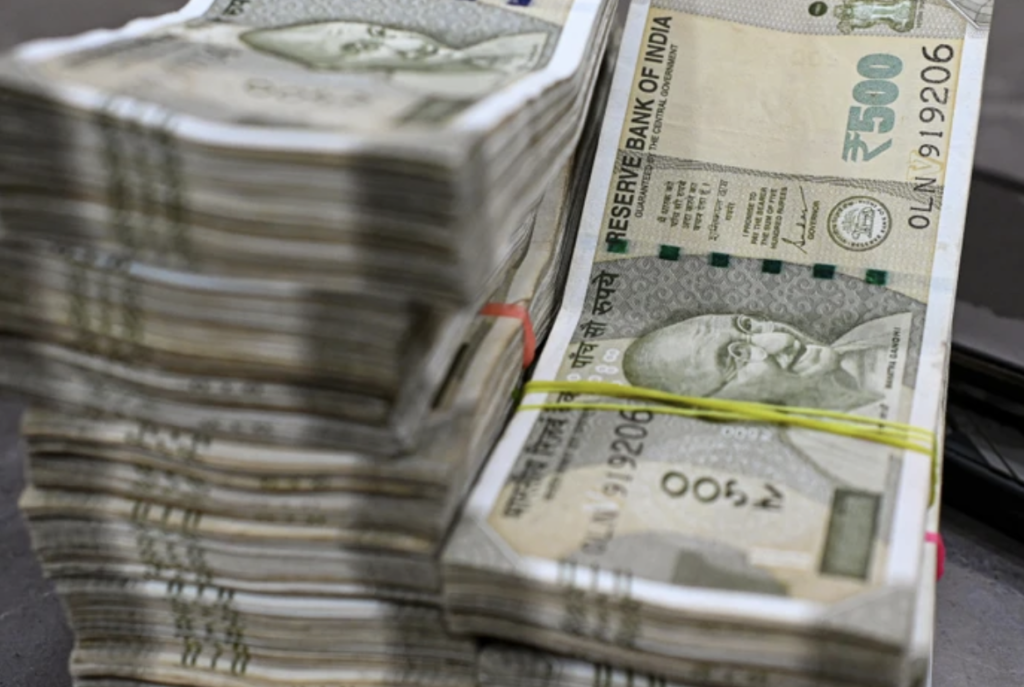
The Indian rupee fell to a record low for the fourth straight session on Tuesday, with an India–US trade deal still out of reach.
Rupee hits record low; market, economy, and stocks: key points
- The Indian rupee fell to a fresh all-time low of 91.03 per US dollar, breaching its previous record of 90.78 touched on Monday.
- The decline was driven by strong dollar demand, triggered by the maturity of positions in the non-deliverable forwards (NDF) market and continued foreign institutional investor (FII) outflows.
- The rupee has lost over 1% in the past five trading sessions, marking sustained pressure on the local currency.
- Asia’s worst-performing currency in 2024, the rupee has weakened up to 6% against the US dollar so far this year.
- Analysts say steep US tariffs on Indian exports and the absence of an India–US trade agreement have added to the currency’s weakness. India remains the only major economy without a trade deal with the US.
Why the rupee weakened despite strong data
- Market participants were surprised by the sharp fall as trade data came in better than expected.
- According to VK Vijayakumar, Chief Investment Strategist at Geojit Investments, the slide may have been accelerated by short-covering in currency positions.
- Sustained FII selling has created a “vicious cycle,” putting persistent pressure on the rupee.
Impact on the Indian economy
- Despite the sharp depreciation, the rupee’s weakness is not hurting the Indian economy, analysts said.
- The Reserve Bank of India (RBI) has refrained from intervening in the forex market, citing strong macroeconomic fundamentals and low inflation.
- India’s trade deficit narrowed to a five-month low of $24.53 billion in November, aided by lower gold imports and stronger exports to the US.
- Retail inflation rose marginally to 0.71% in November, still far below the RBI’s medium-term target of 4%.
- India’s economy grew 8.2% in the July–September quarter, the fastest pace in six quarters, highlighting resilience despite global trade challenges.
Impact on stock markets
- The steep fall in the rupee has begun to threaten the recovery in India’s $5.2 trillion equity market.
- The NSE Nifty 50 index slipped around 1.7% from near record highs in November, before recovering part of the losses.
- In December, foreign investors pulled out $1.6 billion from Indian equities, reversing inflows seen in the previous two months. Outflows were also recorded in the debt market.
- Analysts say tariff uncertainty and the lack of an India–US trade deal continue to weigh on investor sentiment.
Stocks that benefit from a weaker rupee
- A depreciating rupee supports export-oriented companies, particularly in the information technology sector.
- The Nifty IT index has risen about 14% since late September, tracking the rupee’s decline.
- However, experts caution that overall equity returns may remain muted, favouring selective sectoral investments amid currency volatility and modest earnings growth.
About the Author