Zelenskyy Brings Intelligence to the Fore as GUR Chief Kyrylo Budanov Becomes Top Aide
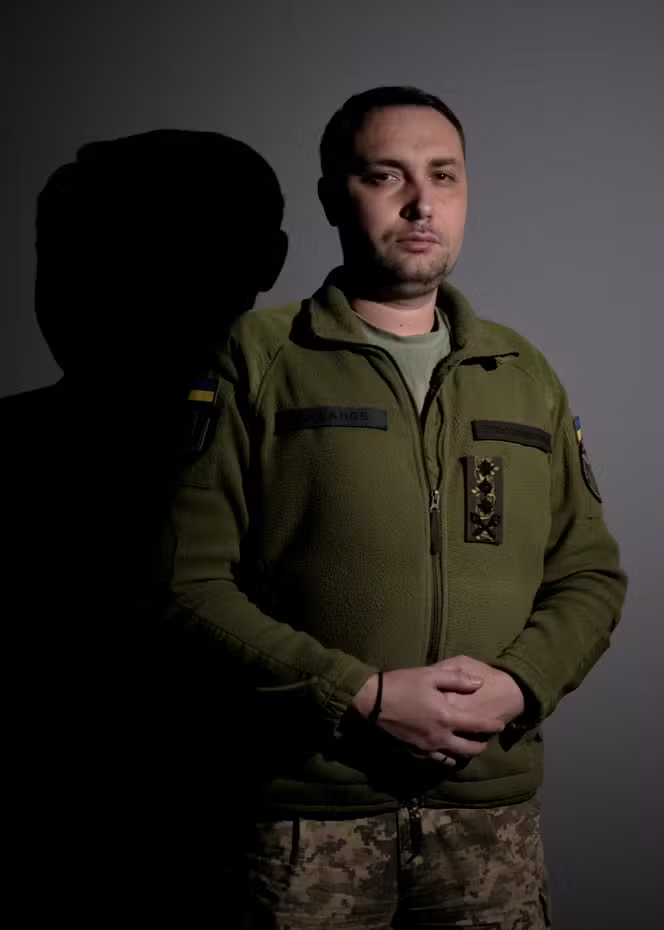
In a move that reflects the realities of a nation at war, Ukrainian President Volodymyr Zelenskyy has named the country’s military intelligence chief, Kyrylo Budanov, as one of his top aides. The decision is being widely read as a signal of how deeply security and intelligence considerations are now woven into Ukraine’s highest level of political decision-making.
For many Ukrainians, Budanov is not a new face. As the head of Main Directorate of Intelligence (GUR), he has emerged over the past years as a key figure in Ukraine’s resistance and survival strategy. Calm, analytical, and often blunt in public assessments, Budanov has become synonymous with Ukraine’s intelligence-led approach to defending itself amid ongoing conflict.
By bringing Budanov closer to the presidential office, Zelenskyy appears to be formalising what has already been an intense working relationship. Since the early days of the war, intelligence briefings, threat assessments, and strategic foresight have shaped everything from battlefield decisions to diplomatic messaging. Making the intelligence chief a top aide underscores the idea that, for Ukraine, security is not just a military issue it is a matter that touches governance, foreign relations, and daily life.
People familiar with Ukraine’s wartime governance say the appointment reflects trust earned under extreme pressure. Budanov has been credited with modernising intelligence operations, strengthening cooperation with international partners, and maintaining morale within his ranks. His assessments, often cautious yet confident, have helped shape public expectations during moments of uncertainty. For Zelenskyy, who balances the roles of wartime leader and statesman, having such a figure close at hand may offer both strategic clarity and political reassurance.
The move also carries symbolic weight. Zelenskyy, a former entertainer turned wartime president, has consistently relied on professionals with battlefield experience to guide critical decisions. Elevating Budanov reinforces the message that Ukraine’s leadership is grounded in expertise forged on the frontlines and in intelligence rooms, rather than abstract policy debates. It tells allies and adversaries alike that Ukraine’s next steps will be informed by real-time assessments, not guesswork.
At the same time, the appointment raises expectations. As a top aide, Budanov’s influence is likely to extend beyond intelligence operations into broader strategic planning. This could include coordination between military commanders and civilian authorities, evaluating risks to infrastructure, and advising on responses to evolving threats. For a country facing constant pressure, such integration may help reduce gaps between information and action.
Public reaction within Ukraine has been largely pragmatic. Many citizens see the decision as a natural evolution in wartime leadership rather than a political reshuffle. In a conflict where surprises can be costly, having a trusted intelligence voice close to the president feels, to many, like a necessary safeguard.
Ultimately, Zelenskyy’s decision to appoint Kyrylo Budanov as a top aide reflects the moment Ukraine is living through one where survival, strategy, and statecraft are inseparable. It is a reminder that in times of war, leadership often narrows to a small circle built on trust, competence, and shared responsibility for the nation’s fate.
About the Author