What India and Cambodia Said After Lord Vishnu Statue Was Allegedly Damaged by the Thai Army
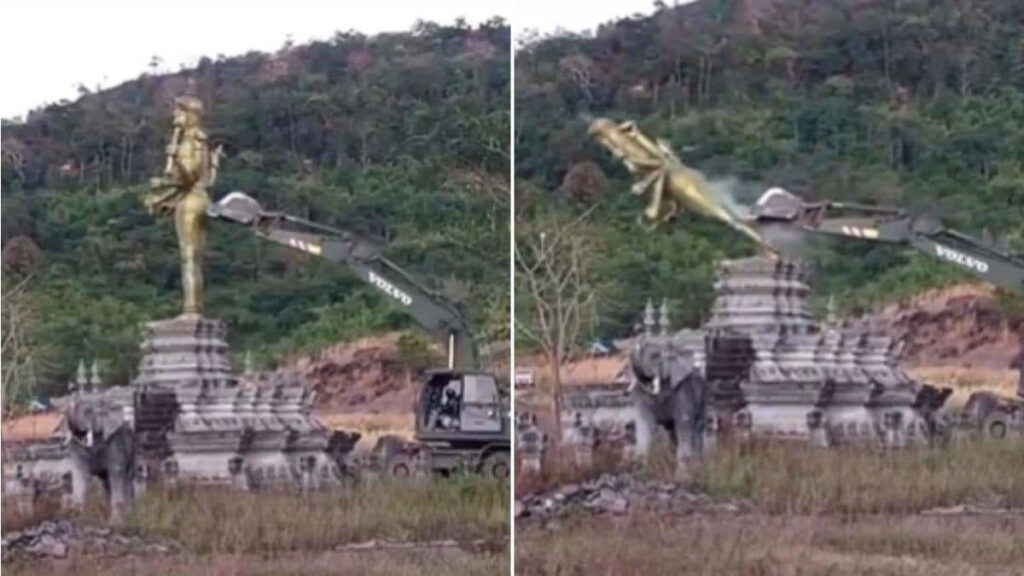
The alleged destruction of a statue of Lord Vishnu near the disputed Thailand–Cambodia border has triggered strong reactions from India and Cambodia, adding a religious and cultural dimension to an already volatile territorial conflict between the two Southeast Asian neighbours.
The incident reportedly took place in a sensitive border area where tensions have been escalating in recent weeks. According to Cambodian officials, the statue representing the Hindu deity Lord Vishnu was damaged during an operation involving the Thai Army. The statue, which was constructed in 2014, held religious significance for both Hindu and Buddhist followers in the region.
Cambodia has firmly stated that the statue was located within its territory. Kim Chanpanha, a spokesperson for the Cambodian government in Preah Vihear province, said the structure stood in the An Ses area, which Cambodia considers part of its sovereign land. Speaking to news agency AFP, Chanpanha asserted that the incident amounted to an unjustified act of destruction.
Satellite imagery and mapping data appeared to support Cambodia’s claim. A review of Google Maps reportedly showed that the statue’s location was approximately 400 metres inside the Cambodian side of the border, rather than directly on the boundary line. This detail has added weight to Phnom Penh’s allegations and intensified diplomatic pressure on Bangkok.
Condemning the incident, Chanpanha said Cambodia strongly opposes the destruction of religious and cultural heritage. He emphasised that temples and statues revered by Hindu and Buddhist communities should be protected, regardless of political or territorial disagreements. Such actions, he said, undermine shared cultural values and deepen regional tensions.
India also responded to the reports with concern. On Wednesday, the Ministry of External Affairs said it was aware of media coverage regarding the demolition of a Hindu religious statue in the border region affected by the Thailand–Cambodia dispute. New Delhi’s reaction reflected not only diplomatic caution but also cultural sensitivity, given the significance of Hindu deities across South and Southeast Asia.
External Affairs Ministry spokesperson Randhir Jaiswal described the incident as deeply unfortunate. He said Hindu and Buddhist deities are widely worshipped across the region and form an important part of the shared civilisational heritage linking India with Southeast Asian nations. Acts that show disrespect towards such symbols, he noted, resonate far beyond national borders.
Jaiswal stressed that irrespective of territorial claims, damage to religious icons hurts the sentiments of followers worldwide and should be avoided. He added that disputes between nations must be handled through peaceful means, urging Thailand and Cambodia to resolve their differences through dialogue and diplomacy rather than actions that could inflame public emotions.
India’s response was carefully worded, avoiding direct attribution of blame while underscoring the importance of mutual respect. The statement also aligned with India’s broader diplomatic approach in the region, which prioritises cultural ties, historical links, and peaceful conflict resolution.
The controversy surrounding the Vishnu statue comes amid renewed hostilities along the Thailand–Cambodia border. The long-standing dispute, which has flared up periodically over the past several decades, escalated sharply this month. According to official figures cited in reports, the latest round of clashes has claimed more than 40 lives and forced nearly one million people to flee their homes.
Both governments have accused each other of provoking the violence. Thailand has alleged that Cambodian forces initiated hostilities, while Cambodia has countered by claiming Thai military operations have caused damage to civilian areas and heritage sites near the border.
Cambodia has repeatedly accused Thailand of harming ancient temples and stone structures located in contested zones during military operations. Some of these sites date back centuries and are considered invaluable cultural landmarks. Phnom Penh has warned that such damage amounts to a violation of international norms protecting cultural and religious heritage during conflicts.
Thailand, on the other hand, has denied deliberately targeting religious structures. Thai officials have claimed that Cambodian forces were positioning soldiers near or within heritage sites, effectively turning them into military locations. This, Bangkok argues, complicated military operations and increased the risk of collateral damage.
The border dispute itself centres on overlapping territorial claims, particularly around areas near historic temples that hold both cultural and strategic importance. One of the most prominent flashpoints has been the region surrounding the Preah Vihear temple, a UNESCO World Heritage Site that has previously been at the heart of violent standoffs between the two countries.
Experts note that religious and cultural symbols often become unintended casualties in territorial conflicts, even when they are not directly targeted. However, the destruction or damage of such symbols can quickly inflame public opinion and make diplomatic resolution more difficult.
In the case of the Vishnu statue, the emotional response has been amplified because the deity is revered across national boundaries. Lord Vishnu is worshipped not only in India but also in several Southeast Asian countries, including Cambodia and Thailand, where Hindu traditions historically influenced art, architecture, and royal customs.
Analysts say the incident underscores the fragile nature of peace along the Thailand–Cambodia border and highlights the need for confidence-building measures. Protecting cultural and religious heritage, they argue, should be a shared priority, even during periods of heightened tension.
International observers have also stressed the importance of restraint. They warn that continued violence and accusations could destabilise the wider region, disrupt trade and tourism, and strain ASEAN’s efforts to promote unity and cooperation among its members.
For now, diplomatic channels remain open, though trust between the two sides appears strained. India’s call for dialogue reflects broader international sentiment that lasting solutions can only be achieved through negotiation rather than confrontation.
As investigations into the statue’s damage continue, the incident serves as a reminder that conflicts are not limited to borders and battlefields. They also affect shared heritage, religious harmony, and the collective memory of civilizations that transcend modern political boundaries.
Whether the Vishnu statue episode becomes a turning point for renewed diplomacy or another flashpoint in the Thailand–Cambodia dispute will depend largely on how both sides choose to respond in the coming days.
About the Author