Eight Elephants Killed in Train Accident in Assam, Renewing Alarm Over Wildlife Safety
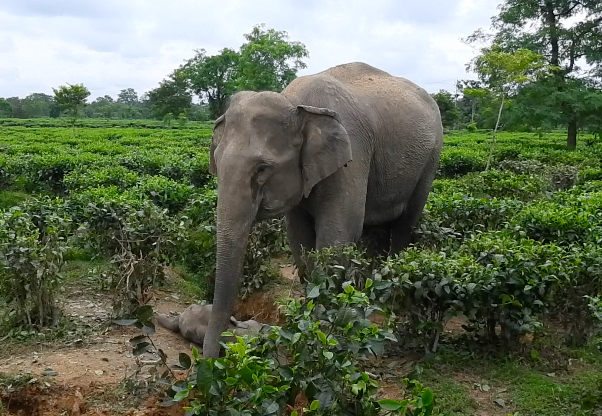
A tragic collision involving the Rajdhani Express and a herd of wild elephants in Assam has once again exposed the fragile balance between infrastructure expansion and wildlife conservation in the Northeast. The accident, which occurred late at night along a forested railway stretch, resulted in the death of several elephants and left others injured, triggering widespread concern and renewed calls for stronger safety measures.
Officials said the elephants were crossing the railway track at a known animal movement corridor when the high-speed train struck the herd. Despite emergency braking by the locomotive pilot, the train could not be stopped in time. The impact killed multiple elephants on the spot, while injured animals were later attended to by forest department veterinarians.
A Night of Chaos and Distress
Eyewitness accounts from railway staff and nearby villagers described scenes of chaos and distress following the collision. Loud thuds were reportedly heard as the train passed through the forest stretch, after which movement on the track came to a halt. Forest officials rushed to the site to manage the situation and prevent further harm, particularly as surviving elephants remained close to the tracks, visibly agitated and disoriented.
Train services on the route were disrupted for several hours as officials worked to clear the track and ensure passenger safety. No injuries were reported among passengers, but many described the incident as deeply unsettling.
A Known Risk Zone
Assam’s forests are crisscrossed by railway lines that pass through traditional elephant corridors—routes used by herds for generations to migrate between feeding and breeding grounds. These corridors are especially active during nighttime hours, increasing the risk of collisions with fast-moving trains.
According to conservationists, the stretch where the Rajdhani Express struck the elephants has witnessed previous incidents involving wildlife. While precautionary measures such as warning signage and coordination between railway and forest officials are in place, experts argue that they are insufficient when trains operate at high speeds through dense forest zones.
The accident has once again drawn attention to the role of Indian Railways, one of the world’s largest rail networks, in ensuring that development does not come at the cost of irreversible ecological damage.
Reactions and Responsibility
Environmental groups and wildlife activists expressed anguish over the incident, calling it a “preventable tragedy.” Many pointed out that elephants are protected under Indian law and play a vital role in maintaining forest ecosystems by dispersing seeds and shaping habitats.
“There is no shortage of data on where elephants move. What is missing is strict enforcement of speed limits and the use of modern detection systems,” said a wildlife expert familiar with Assam’s elephant corridors.
Political leaders and civil society members also reacted strongly, urging the authorities to fix accountability and ensure that safety protocols are followed rigorously. Demands have been raised for real-time coordination between train drivers and forest control rooms, particularly during night hours.
Measures on Paper, Gaps on Ground
Over the years, several measures have been proposed to prevent elephant-train collisions, including speed restrictions, deployment of track-side watchers, use of thermal cameras, and installation of early-warning systems. In some sections, temporary speed limits are imposed when elephant movement is reported.
However, conservationists argue that these measures are often inconsistently implemented. Human monitoring alone, they say, is not enough in dense forests and poor visibility conditions. Permanent solutions such as underpasses, overpasses, and fencing along critical corridors are frequently delayed due to cost and logistical challenges.
Beyond Numbers and Statistics
The death of elephants in train accidents is not merely a statistic for Assam, which holds one of the largest elephant populations in the country. Each loss deepens human-wildlife conflict, as displaced or distressed herds are more likely to stray into villages, damaging crops and property.
Elephants also carry cultural significance in the region, symbolising both heritage and ecological balance. Their deaths raise uncomfortable questions about the price of rapid development in biodiversity-rich landscapes.
The Way Forward
Following the incident, railway authorities announced an internal review of safety protocols along forest stretches and assured closer coordination with the forest department. Forest officials, meanwhile, have intensified patrolling in the area to monitor elephant movement and prevent further accidents.
For many observers, the collision involving the Rajdhani Express should serve as a turning point rather than another forgotten headline. Balancing efficient rail connectivity with wildlife protection is no longer optional—it is an urgent necessity.
As Assam mourns the loss of its gentle giants, the hope remains that this tragedy will push policymakers to act decisively, ensuring that India’s fastest trains do not continue to exact their highest toll on its most vulnerable wildlife.
About the Author