Dhurandhar: A Film That Looks at Power Without Pretence

Hindi cinema has always been drawn to stories of power—how it is acquired, how it is exercised, and how it changes those who possess it. From royal courts to political corridors, the big screen has repeatedly explored authority as spectacle. Yet, in recent years, there has been a visible shift. Audiences now seem less interested in loud declarations of dominance and more curious about the quieter, more unsettling mechanics behind it. Dhurandhar enters this changing cinematic landscape with an ambition that appears rooted in character rather than grandiosity.
The very title sets the tone. “Dhurandhar” is not a flattering word in the traditional sense. It suggests sharpness, calculation, and a deep understanding of systems. A dhurandhar is someone who knows how the world works and uses that knowledge to their advantage. By choosing this name, the film signals that it is not about innocence or idealism, but about realism—about how influence is built, sustained, and justified.
A Story Shaped by Character
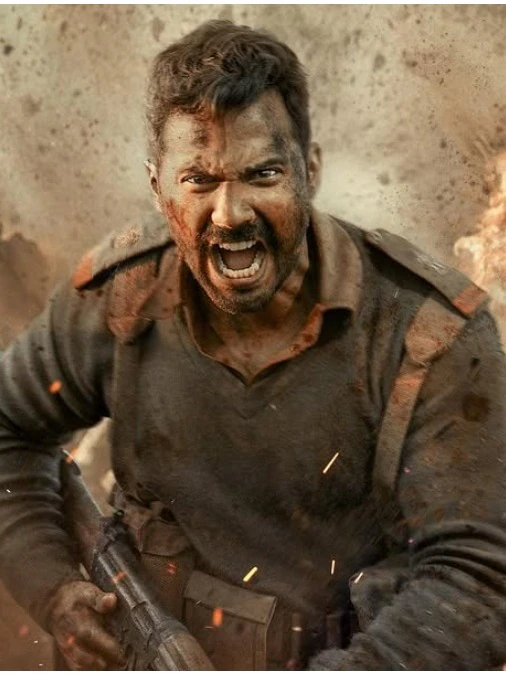
At its core, Dhurandhar is a character-driven film. Instead of relying solely on dramatic twists or high-voltage confrontations, it appears to focus on the internal journey of its central figure. This is not a story of sudden transformation but of gradual evolution—one shaped by choices, circumstances, and ambition.
The protagonist is neither presented as a spotless hero nor as a straightforward antagonist. Rather, the film seems interested in portraying a person shaped by the world around him, responding to pressure with strategy instead of emotion. Such an approach allows the audience to engage more deeply, not by agreeing with every action, but by understanding the logic behind them.
This form of storytelling reflects a growing maturity in mainstream Hindi cinema, where complexity is no longer confined to independent films or niche platforms. Dhurandhar appears to embrace the idea that mass audiences are capable of engaging with layered narratives.
Power in Its Everyday Form
One of the most striking aspects of Dhurandhar is its apparent refusal to romanticise power. Influence in the film is not shown as glamorous or heroic, but as something routine, often exhausting, and deeply isolating. Meetings, negotiations, silences, and calculated decisions carry as much weight as confrontations.
This portrayal feels closer to reality. Power, after all, is rarely exercised in dramatic speeches alone. It is often embedded in paperwork, conversations behind closed doors, and decisions that appear small but carry long-term consequences. By focusing on these details, Dhurandhar attempts to ground its narrative in authenticity.
Performance Over Spectacle
Much of the film’s impact rests on performance. In stories about authority, acting becomes an exercise in restraint. A glance, a pause, or a measured response can communicate more than raised voices or physical aggression. Dhurandharseems to rely on this subtlety, allowing character behaviour to reveal intent.
The central performance is expected to anchor the film, not by demanding attention, but by commanding it quietly. This style of acting aligns well with the film’s themes, reinforcing the idea that real power often operates without noise.
Supporting characters also appear to be written with care, functioning not merely as extensions of the protagonist but as individuals with their own motivations and limitations. Their interactions help shape the narrative, offering contrast and tension without resorting to caricature.
Direction and Visual Tone
Visually, Dhurandhar adopts a controlled and grounded aesthetic. Rather than stylised excess, the film reportedly favours realism—using locations, lighting, and framing to create an atmosphere of seriousness. The camera often lingers, allowing scenes to breathe and conversations to unfold naturally.
This measured pace may not appeal to viewers seeking constant action, but it serves the film’s intent. The direction appears focused on immersion, drawing the audience into a world where every decision matters and every relationship has a cost.
The background score and sound design further support this mood, avoiding unnecessary dramatics and instead reinforcing tension through understatement.
A Reflection of Contemporary Society
While Dhurandhar does not position itself as a commentary on specific real-life events, its themes resonate strongly with contemporary times. Questions about leadership, accountability, loyalty, and public perception are deeply relevant today. The film reflects a society where power is scrutinised but also endlessly negotiated.
In this sense, Dhurandhar functions as both a story and a mirror. It does not instruct the audience on what to believe but encourages them to observe, question, and interpret. Such an approach respects viewer intelligence and opens space for discussion rather than conclusion.
Avoiding Easy Moral Answers
Perhaps the most notable aspect of Dhurandhar is its embrace of moral ambiguity. The film does not offer clear villains or unquestionable heroes. Instead, it presents people operating within constraints, making choices that are neither entirely right nor entirely wrong.
This refusal to simplify morality may be unsettling for some viewers, but it is also what gives the film depth. Real life rarely provides neat answers, and Dhurandhar seems comfortable sitting with that discomfort.
Conclusion
Dhurandhar stands as a film that values observation over exaggeration. By focusing on character, consequence, and context, it moves away from formulaic storytelling and towards something more reflective. It asks the audience not just to watch, but to think—to consider how power works, what it demands, and what it leaves behind.
Whether Dhurandhar ultimately succeeds will depend on how audiences respond to its quiet confidence and measured storytelling. But in intent and execution, it represents an important step in the ongoing evolution of Hindi cinema—one that recognises that the most compelling stories of power are often the ones told without noise.
About the Author