India Carriers Hit Hard as Middle East Conflict Disrupts Flights, Hundreds Cancelled
Indian airlines are facing severe operational and financial turbulence after escalating hostilities in parts of the Middle East led to sudden airspace restrictions, forcing widespread cancellations on key Gulf routes and disrupting international travel networks.
Several West Asian nations issued emergency aviation advisories and temporarily closed sections of their airspace following military escalation in the region, prompting carriers to suspend or reroute services. The disruption has particularly impacted flights between India and major transit hubs such as Dubai, Abu Dhabi, Doha, Muscat, Kuwait City, Riyadh and Jeddah — critical gateways for passengers travelling onward to Europe, North America and Africa.
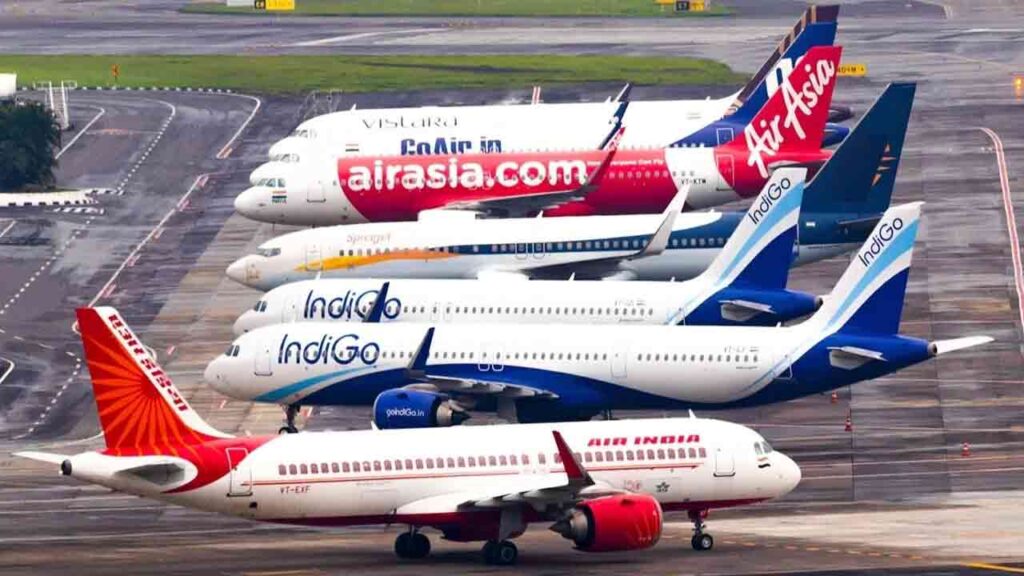
Major Indian carriers including Air India, IndiGo, Akasa Air, and SpiceJet confirmed temporary suspension or cancellation of multiple services to Gulf destinations. Airlines cancelled several daily flights to Dubai and Abu Dhabi, suspended select services to Doha and Muscat, and halted operations to Kuwait, Riyadh and Jeddah after receiving revised airspace notifications. A number of aircraft that were already airborne were diverted or brought back to their origin airports as precautionary measures.
Airport sources indicated that more than 300 international departures and arrivals linked to Middle Eastern sectors were either cancelled, delayed, or rescheduled within two days of the escalation. Delhi, Mumbai, Hyderabad and Kochi airports witnessed significant congestion at international terminals as stranded passengers sought alternative arrangements.
The financial impact is expected to be substantial if the disruption continues. Aviation analysts estimate that Indian carriers could incur losses running into several crores of rupees per day due to ticket refunds, complimentary rescheduling, aircraft grounding, crew repositioning expenses and higher fuel burn resulting from longer alternate flight paths. Gulf routes are among the most lucrative for Indian airlines due to heavy passenger traffic, including migrant workers, business travellers and transit passengers. Prolonged suspension of these sectors could dent revenue projections for the ongoing quarter.
Travel operators reported that pilgrimage traffic to Saudi Arabia and business travel to the United Arab Emirates were particularly affected, while thousands of passengers with onward connections to Europe and North America were forced to rework itineraries. Airlines activated helplines and offered waivers on change and cancellation fees, stating that passenger safety remains the overriding priority.
Market reaction reflected the uncertainty, with aviation and travel-related stocks witnessing volatility as investors assessed the potential scale and duration of the disruption. Industry experts cautioned that if geopolitical tensions persist, airlines may be compelled to maintain reduced schedules, leading to sustained operational strain and possible fare adjustments.
For now, carriers remain in contingency mode, reviewing schedules daily and coordinating with international aviation authorities as they await clearer signals on the reopening of restricted air corridors.
About the Author