US Military Action Against Venezuela Raises Fears of Escalation Across Latin America
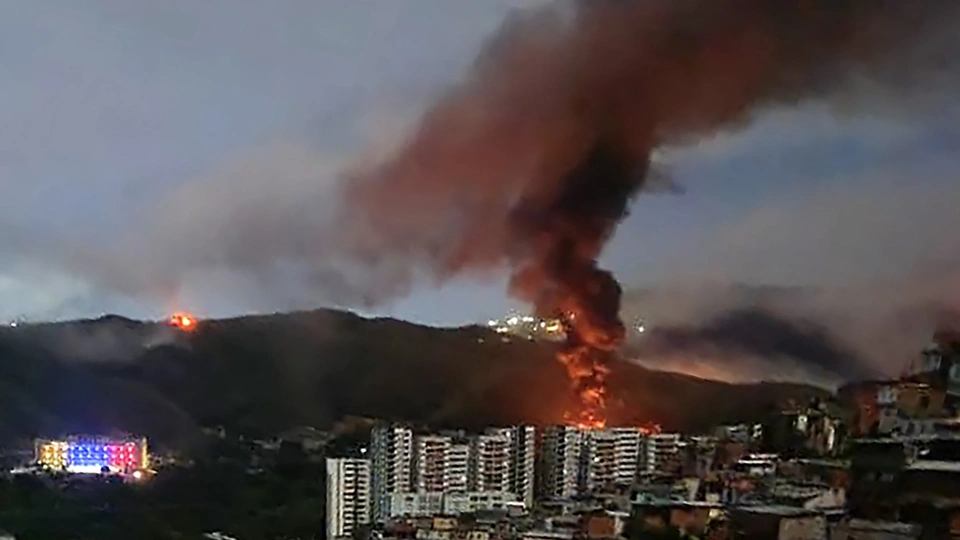
The news of United States strikes on Venezuela has sent a fresh wave of anxiety across Latin America and far beyond, reviving memories of a long and troubled relationship between Washington and Caracas. For many ordinary people, both inside Venezuela and across the region, the sound of explosions or reports of military action are not just strategic developments discussed in think tanks, but moments that stir fear, uncertainty, and deep questions about what comes next.
According to initial accounts circulating through diplomatic and media channels, the strikes were limited in scope and aimed at specific targets, with US officials stressing that the action was not directed against the Venezuelan people. The emphasis, they said, was on addressing what Washington described as urgent security concerns. Even so, the very fact that American forces carried out military action against a sovereign nation has heightened tensions and drawn sharp reactions from governments and international bodies.
Venezuela’s leadership was quick to condemn the strikes, calling them an act of aggression and a violation of international law. In official statements broadcast to the nation, authorities accused the US of undermining regional stability and using force instead of diplomacy. Streets in Caracas and other cities saw a mix of anger, anxiety, and defiance, with some citizens rallying around national symbols while others worried about the possibility of further escalation and its impact on daily life.
For Venezuela, a country already grappling with economic hardship, sanctions, and political polarization, any military action adds another layer of strain. Infrastructure damage, even if limited, raises concerns about fuel supplies, electricity, and access to basic services. Families who have endured years of shortages and uncertainty fear that renewed confrontation could worsen living conditions or prompt another wave of migration, pushing more people to seek safety and opportunity beyond the country’s borders.
From the US perspective, officials framed the strikes as a reluctant but necessary step, arguing that diplomatic efforts had failed to address the concerns at hand. Statements from Washington emphasized precision and restraint, alongside repeated claims that the goal was deterrence rather than regime change. Still, critics within the US and abroad questioned whether military force would achieve lasting results or simply harden positions on both sides.
International reaction was swift and divided. Some allies of the United States expressed cautious support or called for understanding the security rationale behind the action, while urging restraint going forward. Others, including several Latin American nations, voiced strong opposition, warning that the use of force could destabilize the region and set a dangerous precedent. Calls for an emergency discussion at international forums underscored the seriousness with which the global community viewed the situation.
Russia and China, both of which have maintained ties with Venezuela, criticized the strikes and reiterated their support for sovereignty and non-interference. Their responses highlighted how the episode fits into a broader pattern of global power competition, where regional conflicts can quickly take on international significance. Analysts noted that Venezuela, long a focal point of geopolitical rivalry, once again finds itself at the center of a much larger struggle.
On the streets and on social media, voices from Venezuela reflected a wide range of emotions. Some citizens expressed anger at the US, blaming decades of pressure and sanctions for the country’s suffering. Others focused their frustration inward, arguing that years of mismanagement and political stalemate had left Venezuela vulnerable. Amid the noise of official statements and expert commentary, these personal reactions revealed the human cost of decisions made far from everyday lives.
The strikes also reopened debate about the effectiveness of military solutions in resolving complex political crises. Past interventions in different parts of the world have shown that even carefully planned actions can have unintended consequences. In Venezuela’s case, the risk is that limited strikes could spiral into a broader confrontation, or harden divisions that make dialogue even more difficult.
As the immediate dust settles, attention is turning to what happens next. Will there be renewed diplomatic efforts, possibly involving regional mediators, to prevent further escalation? Or will this episode mark the beginning of a more confrontational phase in US–Venezuela relations? Much will depend on the choices made in the coming days by leaders in Washington and Caracas, as well as the pressure applied by the international community.
For ordinary Venezuelans, the hope is simple: that the situation does not slide into a wider conflict and that space remains for a peaceful resolution. For the world, the strikes serve as a reminder of how fragile stability can be, and how quickly long-simmering disputes can erupt into open confrontation. In a region that has seen its share of upheaval, the unfolding events underscore the urgent need for dialogue, restraint, and a renewed commitment to solutions that put human lives ahead of geopolitical calculations.
About the Author