Ukraine-Linked Drone Attacks Target Moscow Overnight, Cause Industrial Blaze in Tula
Lorem ipsum dolor sit amet, consectetur adipiscing elit. Ut elit tellus, luctus nec ullamcorper mattis, pulvinar dapibus leo.
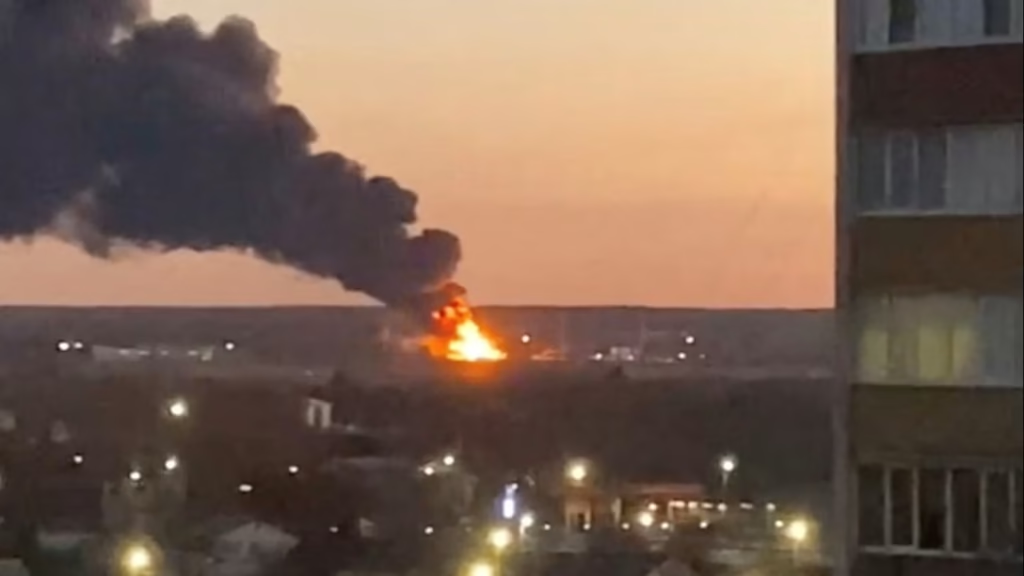
Ukraine launched a fresh wave of overnight drone attacks targeting Moscow and surrounding regions, Russian authorities said on Wednesday, highlighting a growing pattern of long-range strikes deep inside Russian territory as the war continues.
According to officials, several unmanned aerial vehicles were intercepted near the Russian capital, while debris from one downed drone sparked a fire at an industrial facility in the Tula region, located just south of Moscow. No casualties were immediately reported, but the incidents caused temporary disruptions and raised fresh security concerns.
Drones Intercepted Near Moscow
Moscow Mayor Sergei Sobyanin said air defence systems shot down at least three drones that were heading toward the capital during the night. He shared the update on the Telegram messaging app, a platform widely used by Russian officials for real-time announcements.
Sobyanin said emergency response teams were quickly dispatched to the locations where drone debris fell. However, he did not report any significant damage to buildings or infrastructure in the city at the time of his statement.
While Moscow itself avoided major impact, the drone activity prompted heightened alert levels and underscored the increasing reach of Ukrainian strikes, which have repeatedly tested Russia’s air defence network in recent months.
Airport Operations Disrupted
The overnight attacks also affected air travel. Russia’s civil aviation authority said that two of the four major airports serving Moscow temporarily restricted operations as a precautionary measure.
Such suspensions have become more frequent amid rising drone activity, as authorities seek to ensure passenger safety and avoid risks posed by falling debris. Flight schedules were later adjusted, though officials did not provide details on the duration of the disruptions or the number of affected flights.
Industrial Fire in Tula Region
Further south, the Tula region reported more serious consequences. Governor Dmitry Milyaev said debris from a downed Ukrainian drone ignited a fire at an industrial site in the region.
Milyaev confirmed that Russian air defence units destroyed 12 drones over Tula during the night. While firefighters quickly responded and brought the situation under control, the governor did not disclose details about the industrial facility involved or the extent of the damage.
Tula is a strategically important region with a long history of industrial production, including defence-related manufacturing. Although authorities did not confirm whether the affected site was linked to military output, the incident added to concerns about the vulnerability of industrial infrastructure far from the front lines.
Large-Scale Drone Interceptions Across Russia
Russia’s defence ministry said its air defence forces intercepted and destroyed a total of 172 Ukrainian drones overnight, nearly half of them over regions that border Ukraine.
The scale of the reported interceptions suggests one of the largest drone operations in recent weeks, spanning multiple regions and stretching Russia’s air defence capabilities. Officials did not specify how many drones may have reached their intended targets or whether additional damage occurred beyond the incidents in Moscow and Tula.
Ukraine Steps Up Deep-Strike Campaign
Ukraine has significantly increased drone attacks deep inside Russia over the past year, framing them as a response to Moscow’s continued missile and drone strikes on Ukrainian cities, energy facilities and civilian infrastructure.
Kyiv has said its long-range drone operations are aimed at military, energy and logistics sites that support Russia’s war effort. Ukrainian officials argue that striking such targets is a way to weaken Russia’s operational capacity and bring the conflict closer to those directing it.
While Ukraine rarely comments in detail on individual strikes, the growing frequency and geographic reach of these attacks point to advancements in drone technology and production, as well as evolving military tactics.
Growing Pressure on Russian Air Defences
The repeated drone incursions have forced Russia to deploy air defence systems across a vast territory, including major cities like Moscow. Analysts say this dispersal can strain resources and increase costs, even when attacks cause limited physical damage.
Temporary airport closures, emergency responses and industrial disruptions add to the broader impact, creating economic and logistical challenges beyond the immediate battlefield.
War Shows No Signs of De-Escalation
The overnight incidents come as fighting continues along multiple fronts in Ukraine, with neither side showing signs of easing military pressure. Russia has maintained regular aerial strikes on Ukrainian cities, while Ukraine has increasingly demonstrated its ability to hit targets far inside Russian territory.
As the conflict enters another phase marked by long-range drone warfare, security risks are expanding well beyond frontline regions. For civilians in major cities like Moscow and industrial hubs such as Tula, the war is becoming more visible and disruptive, even hundreds of kilometres from active combat zones.
Authorities in Russia said investigations into the incidents were ongoing, and air defence systems remain on high alert as the threat of further drone attacks persists.
About the Author