Mausam Noor’s Return to Congress: A Homecoming That Could Gently Reshape Bengal’s Political Equation
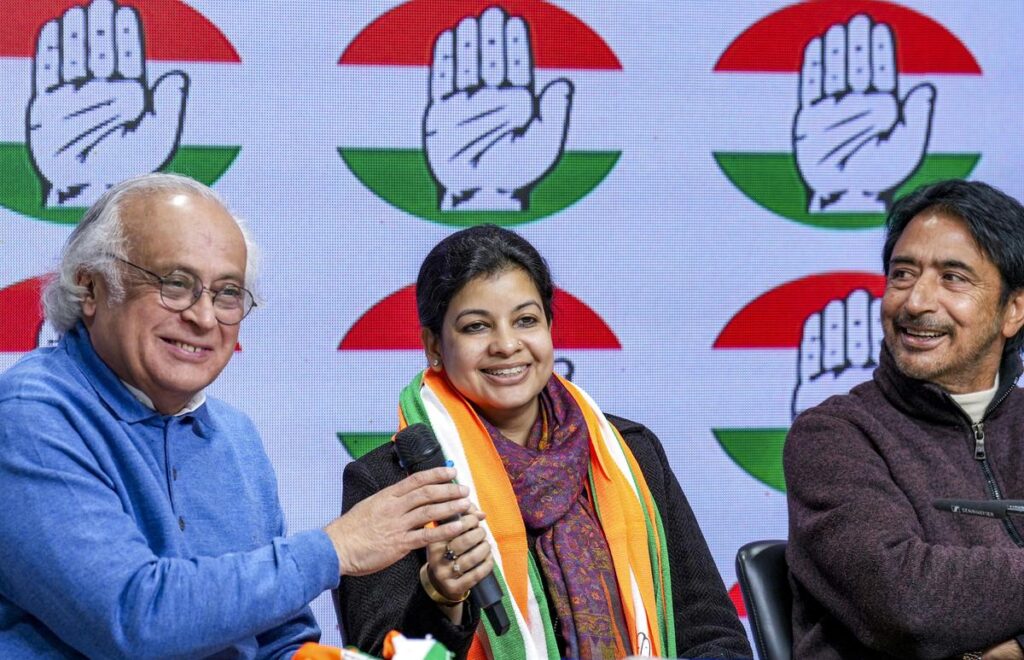
The return of Mausam Noor to the Indian National Congress after her stint with the All India Trinamool Congress is more than a routine political switch. In a state where politics is deeply emotional, fiercely competitive, and rooted in identity and legacy, her homecoming has stirred conversations across party lines and tea stalls alike. For Bengal’s Congress, long struggling to remain relevant, Mausam Noor’s return carries symbolic weight. For Trinamool, it raises questions about loyalty and leadership. And for voters, it reopens an old debate about trust, representation, and political purpose.
Mausam Noor is not a newcomer to Bengal’s political landscape. Hailing from Malda, she carries a surname that still resonates in the district’s political memory. As the niece of the late A.B.A. Ghani Khan Choudhury, a towering Congress leader of Bengal, her political journey has always been intertwined with legacy. When she left the Congress and joined Trinamool Congress in 2019, it was seen as part of a larger trend leaders migrating to the ruling party in search of political survival and relevance. Her return now, years later, signals that the tide may not be entirely one-way.
For the Congress, especially in West Bengal, this moment comes at a time of introspection. Once a dominant force in the state, the party has been reduced to the margins over the past decade, squeezed between the rise of Trinamool and the aggressive expansion of the BJP. Mausam Noor’s return does not suddenly change electoral arithmetic, but it offers something equally important: narrative. It allows the Congress to project itself as a party that leaders still come back to not just abandon.
In Malda and neighbouring districts, Mausam Noor still commands recognition, if not unquestioned loyalty. Her earlier victories as a Congress MP gave the party rare moments of confidence in a region where its footprint has otherwise shrunk. Her move back could help Congress rebuild a local organisational structure that has withered over time. Booth-level workers, many of whom drifted away due to lack of direction, may see her return as a reason to re-engage. In Bengal politics, morale often matters as much as numbers.
From Trinamool Congress’s perspective, the impact is more subtle but not insignificant. Under Mamata Banerjee, Trinamool has built its strength by absorbing leaders from other parties, including Congress and the Left. While the party remains electorally dominant, individual exits like Mausam Noor’s highlight a quieter churn within its ranks. For Trinamool, which prides itself on discipline and unity, such departures can raise internal questions, even if they do not immediately threaten power.
Politically, Mausam Noor’s exit may not dent Trinamool’s vote base in a dramatic way. The party’s strength lies in its grassroots machinery and welfare-centric narrative. However, in districts like Malda, where politics has traditionally been more fragmented, her departure could slightly loosen Trinamool’s grip, particularly among minority voters who have historically seen her as a familiar face. Even marginal shifts can matter in tightly contested seats.
The larger question, however, is what this means for the opposition space in Bengal. For years, anti-Trinamool votes have been split between Congress and the BJP, often benefiting the ruling party. Mausam Noor’s return raises the possibility however tentative of Congress attempting to reclaim its old social coalition, especially Muslims and sections of rural voters in central and north Bengal. If Congress can rebuild even a fraction of its earlier base, it could complicate electoral calculations in future elections.
Yet challenges remain steep. The Congress organisation in Bengal is weak, faction-ridden, and lacks a clear statewide face. Mausam Noor alone cannot fix structural problems that have developed over decades. Her influence is region-specific, and translating personal credibility into party revival will require sustained effort, unity, and resources. The party will need to decide whether it wants to merely survive or seriously compete and that decision cannot rest on one leader’s shoulders.
For voters, political switches often evoke cynicism. Many see such moves as driven by personal ambition rather than ideology. Mausam Noor’s task, therefore, will be to explain her return not just as a change of party, but as a return to principles. If she can convincingly articulate why Congress, despite its weaknesses, aligns better with her political vision, she may regain trust. Bengal’s electorate, while forgiving, is also deeply perceptive; it tends to reward sincerity over convenience.
Her return also reopens a conversation about Congress’s historical role in Bengal. Before the rise of Trinamool, Congress was a key player, particularly in districts like Malda and Murshidabad. Mausam Noor embodies that memory. Her presence could help reconnect younger voters with a political past they know only through stories. Whether nostalgia can translate into votes is uncertain, but it can certainly reignite discussion.
In the broader national context, the move adds to Congress’s attempt to project itself as a party in revival mode, even in states where it has been weakened. Bengal remains a difficult terrain, but every returnee strengthens the argument that the party is not entirely written off. For Trinamool, it is a reminder that dominance does not always guarantee permanence, and that leaders, like voters, continue to reassess their choices.
Ultimately, Mausam Noor’s return to Congress is less about immediate electoral impact and more about political signalling. It signals that allegiance in Bengal politics is still fluid, that legacy still matters, and that parties must constantly work to retain both leaders and voters. Whether this move becomes a footnote or a turning point will depend on what follows how Congress nurtures the opportunity, how Mausam Noor reconnects with the grassroots, and how Bengal’s voters respond.
In a state where politics is lived as much as it is debated, her homecoming has reopened old chapters and posed new questions. The answers will unfold not in press conferences, but in the slow, demanding work of rebuilding trust on the ground.
About the Author