Khaleda Zia Passes Away: Exploring Bangladesh’s Former PM and Her Ties with India
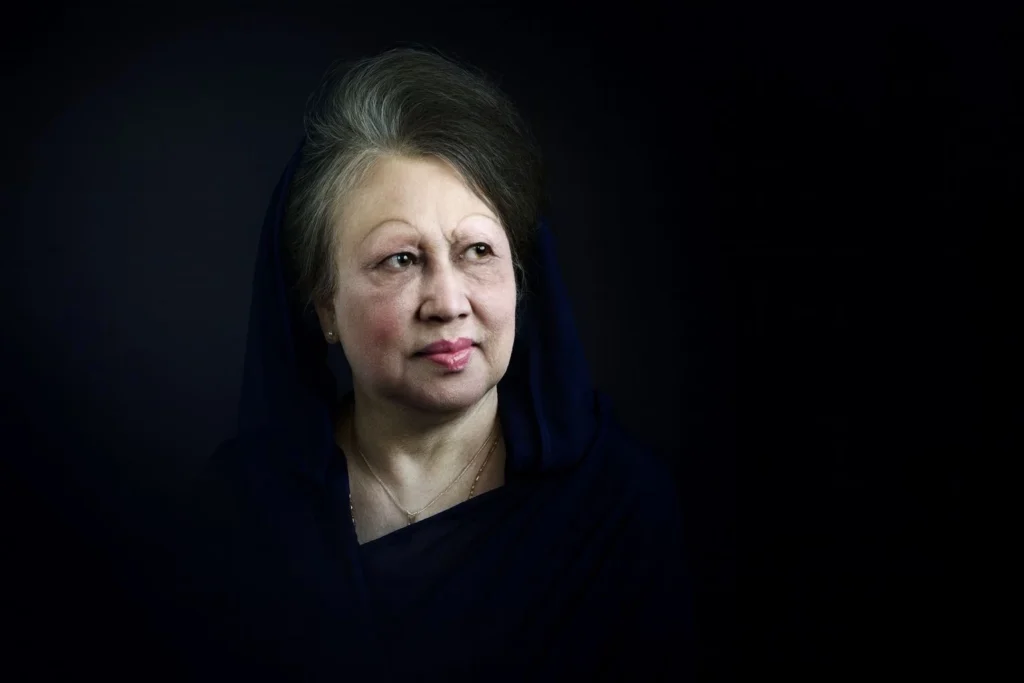
Bangladesh’s first woman prime minister, Khaleda Zia, passed away on Tuesday at the age of 80, shortly after her morning prayers, the Bangladesh Nationalist Party (BNP) confirmed in an official statement. The three-time prime minister, who had long been a pivotal figure in Bangladesh’s political landscape and a key rival of former Prime Minister Sheikh Hasina, had been battling multiple health issues, including advanced cirrhosis of the liver, arthritis, diabetes, and heart and chest problems.
Despite being out of office since 2006 and spending several years either in jail or under house arrest, Khaleda Zia remained a central figure in Bangladesh’s politics, commanding a loyal base of supporters and playing a key role in shaping the BNP’s policies and electoral strategy.
Early Life and India Connection
Khaleda Zia was born on August 15, 1945, in Jalpaiguri, then part of the undivided Dinajpur district in British India. After the Partition of India in 1947, her family migrated to Dinajpur town, which is now part of modern-day Bangladesh. This early connection to Bengal, which today straddles India and Bangladesh, forms a significant part of her personal and historical ties to India.
Her father, Iskandar Ali Majumder, worked in the tea business in undivided Dinajpur, while her mother, Taiyaba Majumder, managed the household. Khaleda Zia began her formal education at Dinajpur Missionary School before joining Dinajpur Girls’ School in 1960, laying the foundation for her future political career.
These early experiences, growing up in a region with strong cultural and social links to India, helped shape her worldview and connections, influencing her political outlook later in life.
Political Rise and Historic Leadership
Khaleda Zia made history in 1991 when she led the BNP to victory in the country’s first free elections in over a decade, becoming Bangladesh’s first female prime minister. Her tenure marked a turning point in Bangladeshi politics, emphasizing democratic governance, economic reforms, and regional diplomacy.
She went on to serve three terms as prime minister, a rare achievement in Bangladesh’s political history, navigating a deeply polarized political environment dominated by intense rivalry with Sheikh Hasina and the Awami League.
Her leadership style was often described as assertive yet pragmatic, and she played a crucial role in shaping Bangladesh’s foreign policy, particularly with neighboring India. While her relationship with India was often complex, her personal and historical ties being born in what is now Indian territory added a unique dimension to bilateral diplomacy.
Health Challenges and Legal Battles
In her later years, Khaleda Zia’s political journey was overshadowed by legal and health challenges. In 2018, she, her son Tarique Rahman, and several aides were convicted for allegedly misusing around $250,000 in foreign donations intended for an orphanage trust established during her last term as prime minister. Khaleda maintained that the charges were politically motivated, designed to marginalize her and weaken the BNP.
Following her conviction, she was imprisoned but later placed under house arrest in March 2020 on humanitarian grounds, as her health deteriorated significantly. By early 2025, the Bangladesh Supreme Court acquitted Khaleda Zia and Tarique Rahman of the corruption charges, restoring her and her family’s political credibility and paving the way for renewed BNP influence in the country.
Legacy and Political Influence
Khaleda Zia’s legacy is inseparable from the BNP’s continued prominence in Bangladeshi politics. Despite spending years away from active office, she maintained considerable sway over party strategy and electoral decisions. The BNP is currently seen as a major contender in the upcoming parliamentary elections in February, with her son, Tarique Rahman, returning to Bangladesh last week after nearly 17 years in self-exile. Tarique is now widely regarded as a strong candidate for the prime ministerial post, signaling continuity of Khaleda Zia’s political vision.
Her political journey, marked by resilience amid adversity, is remembered for breaking gender barriers in a traditionally male-dominated political arena. As Bangladesh’s first female prime minister, she not only led the nation but also inspired a generation of women to engage in politics and public service.
Khaleda Zia’s Connection to India
While many remember Khaleda Zia for her political rivalry with Sheikh Hasina, few are aware of her deep-rooted India connection. Born in Jalpaiguri, part of present-day West Bengal, India, her early life straddled cultural and historical links between India and Bangladesh. This connection often influenced her diplomatic perspective, particularly in handling relations with India during her time as prime minister.
Her education and upbringing in the Bengal region provided her with insights into shared cultural and economic ties, which occasionally informed BNP policies on cross-border cooperation, trade, and regional diplomacy. Khaleda Zia’s India connection is an important aspect of understanding her approach to foreign policy and regional politics.
Final Days and Passing
Khaleda Zia passed away peacefully at the age of 80, following her morning prayers. Her death marks the end of an era in Bangladeshi politics. Tributes have poured in from political leaders, party supporters, and citizens across Bangladesh, highlighting her resilience, political acumen, and historic contributions as the nation’s first female leader.
Despite her later years being marked by health struggles and legal battles, her influence in Bangladesh’s political sphere remained strong, ensuring that her legacy endures through the BNP and the next generation of leaders.
About the Author