Jammu medical college loses recognition amid Muslim admission row, questions mount over LoP withdrawal
A newly opened medical college in Jammu and Kashmir has been pushed into crisis after the country’s medical regulator withdrew its permission to operate, setting off uncertainty for students and reigniting a politically sensitive debate around religion, merit and governance. The Shri Mata Vaishno Devi Institute of Medical Excellence (SMVDIME) in Reasi district lost its Letter of Permission (LoP) for running an MBBS course just weeks after its first batch of students was admitted, an action officially attributed to regulatory shortcomings but unfolding amid a heated controversy over the religious composition of the intake.
The college was established under the Shri Mata Vaishno Devi Shrine Board with the objective of expanding medical education facilities in the Jammu region and strengthening local healthcare services. Approved to admit 50 MBBS students in its inaugural year, the institution was projected as a major public investment in education and health. Admissions were conducted through the National Eligibility-cum-Entrance Test (NEET) counselling process, which is designed to be strictly merit-based and religion-neutral.
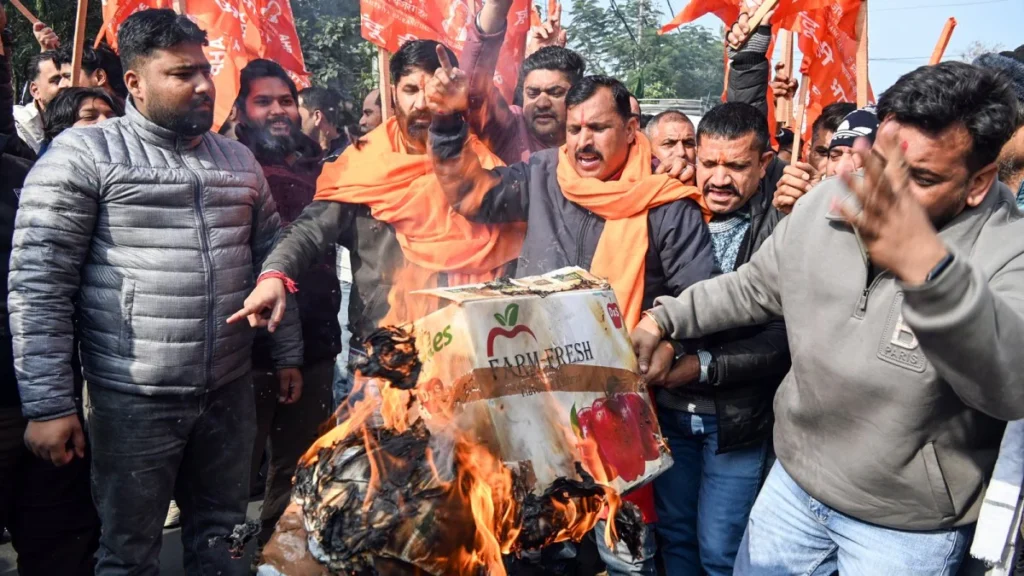
Trouble began when the admission list was made public and it emerged that a significant majority of the selected students belonged to the Muslim community. While the outcome reflected NEET rankings and counselling preferences, it triggered protests in parts of Jammu. Several political leaders and social organisations questioned how a college named after the Vaishno Devi shrine could have such an admission profile. Demonstrations followed, memoranda were submitted to the administration and demands were raised for a review or cancellation of admissions, turning an academic issue into a wider social and political flashpoint.
As public pressure mounted, the focus shifted from the admission process to the institution itself. The National Medical Commission, which regulates medical education in the country, carried out an inspection of the college through its Medical Assessment and Rating Board. According to the regulator, the inspection revealed multiple deficiencies that violated minimum standards required to run an undergraduate medical programme. These reportedly included shortages in faculty, incomplete infrastructure, inadequate clinical exposure and shortcomings in hospital attachments, all of which are considered essential for safe and effective medical training.
Based on these findings, the commission withdrew the Letter of Permission with immediate effect, meaning the college is no longer authorised to conduct its MBBS course for the current academic session. The LoP is a conditional approval that allows new medical colleges to admit students, and its withdrawal signifies that the regulator does not consider the institution ready to impart medical education at this stage. Officials have maintained that the decision was purely regulatory and unrelated to the religious identity of the students.
However, the timing of the move has fuelled debate. The inspection and subsequent withdrawal came at a moment when protests over the so-called Muslim admission row were at their peak. This sequence has led to questions about whether political and public pressure played any indirect role in accelerating the regulatory action. While there is no official acknowledgement of such influence, education experts note that perception matters, especially when administrative decisions coincide with contentious public campaigns.
For the students who secured admission after clearing NEET, the development has been deeply unsettling. Many had already relocated and begun preparations for their medical education when the LoP was withdrawn. To prevent academic loss, the NMC has directed that all affected students be accommodated in other recognised medical colleges within Jammu and Kashmir as supernumerary seats. This arrangement is intended to ensure continuity of education, but it also means fresh adjustments, transfers and administrative hurdles for students and their families.
Political reactions to the episode have been sharply divided. Some leaders have welcomed the regulator’s action, arguing that maintaining standards in medical education must take precedence over all other considerations. Others have warned that the controversy risks eroding trust in merit-based systems and deepening communal fault lines. Civil society voices have emphasised that professional education must remain insulated from identity politics and that institutions should be judged solely on compliance and quality.
The withdrawal of the LoP does not permanently shut the door on the medical college. Regulatory rules allow institutions to seek fresh permission after addressing deficiencies. This would require completing infrastructure, recruiting qualified faculty, strengthening hospital facilities and successfully clearing follow-up inspections. Until then, however, the college cannot admit new MBBS students, and its future timeline remains uncertain.
Beyond the immediate crisis, the episode highlights larger challenges facing medical education in India. Rapid expansion of medical seats without full readiness can expose students to instability, while institutions associated with religious or cultural bodies face heightened scrutiny and expectations. The situation in Jammu underscores the need for transparent regulation, clear communication and a firm commitment to constitutional principles of equality and merit.
As the controversy continues to unfold, the immediate priority remains safeguarding the academic futures of students caught in the crossfire. For regulators and administrators, the episode serves as a reminder that educational governance must be robust enough to withstand political pressure while remaining sensitive to social realities. How this balance is managed will determine whether the incident becomes a turning point for reform or a cautionary tale of how education can become entangled in wider conflicts.
About the Author