EC Announces Poll Dates; Results on May 2: West Bengal to Vote on April 23 & 29, Tamil Nadu on April 23, Others on April 9
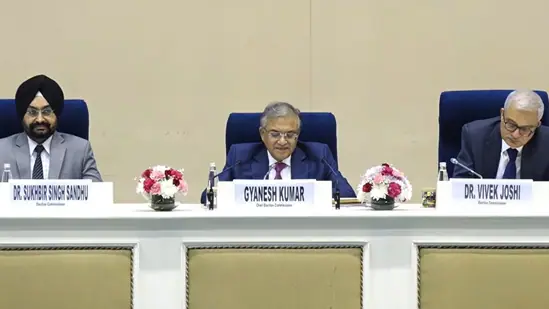
The Election Commission of India on Sunday announced the schedule for assembly elections across four states and one Union Territory, setting in motion a major democratic exercise involving millions of voters across the country.
Addressing a press conference in New Delhi, Chief Election Commissioner Gyanesh Kumar said that around 17.4 crore electors are registered to vote across 824 assembly constituencies in the states of West Bengal, Tamil Nadu, Kerala, Assam and the Union Territory of Puducherry.
The Commission said counting of votes for all states and the Union Territory will take place on May 2, when results will determine the next governments in these regions.
Polling Schedule
According to the schedule released by the Commission, West Bengal will vote in two phases on April 23 and April 29, reflecting the state’s large electorate and logistical requirements.
Tamil Nadu will go to polls in a single phase on April 23, while Kerala, Assam, and Puducherry will hold polling on April 9.
Election officials said the staggered schedule will enable the Commission to ensure adequate deployment of security personnel, polling officials and monitoring teams in all constituencies.
Large Electoral Exercise
Chief Election Commissioner Gyanesh Kumar said the elections involve 824 assembly constituencies, making it one of the largest state-level electoral exercises in the country.
The constituency distribution includes:
294 seats in West Bengal
234 seats in Tamil Nadu
140 seats in Assam
140 seats in Kerala
16 seats in Puducherry
The electoral rolls contain approximately 17.4 crore registered voters, including a significant number of first-time voters.
Officials said arrangements have been made to ensure accessible polling stations for elderly citizens and persons with disabilities, along with assistance facilities for voters who require support.
Security and Monitoring Measures
The Election Commission said central armed police forces will be deployed in sensitive and vulnerable constituencies to ensure peaceful polling.
In addition, micro-observers, flying squads, surveillance teams and video monitoring units will oversee the conduct of elections and enforce the Model Code of Conduct, which came into effect immediately after the announcement of the schedule.
Authorities warned that strict action will be taken against violations such as distribution of money, inducement of voters, or misuse of official machinery during the campaign period.
Technology and Voter Services
The Commission also plans to use technology-driven monitoring systems, including mobile applications for real-time reporting by election officials and digital platforms for voters to verify their details in the electoral rolls.
Special arrangements will be made for first-time voters, senior citizens and differently-abled voters, with facilities designed to make polling stations more accessible.
Political Significance
The upcoming elections are expected to witness intense competition among national and regional political parties, with campaign debates likely to revolve around welfare schemes, economic development, employment and governance.
With the announcement of the poll schedule and the results set to be declared on May 2, political parties are expected to intensify their campaigns across the five regions in the coming weeks.
Chief Election Commissioner Gyanesh Kumar urged voters to participate actively in the democratic process, assuring that the Commission is committed to conducting free, fair and peaceful elections across all constituencies.
About the Author