DMK campaign song targets BJP, says Stalin’s return as CM vital for Tamil Nadu; Rs 5,000 credited to women beneficiaries
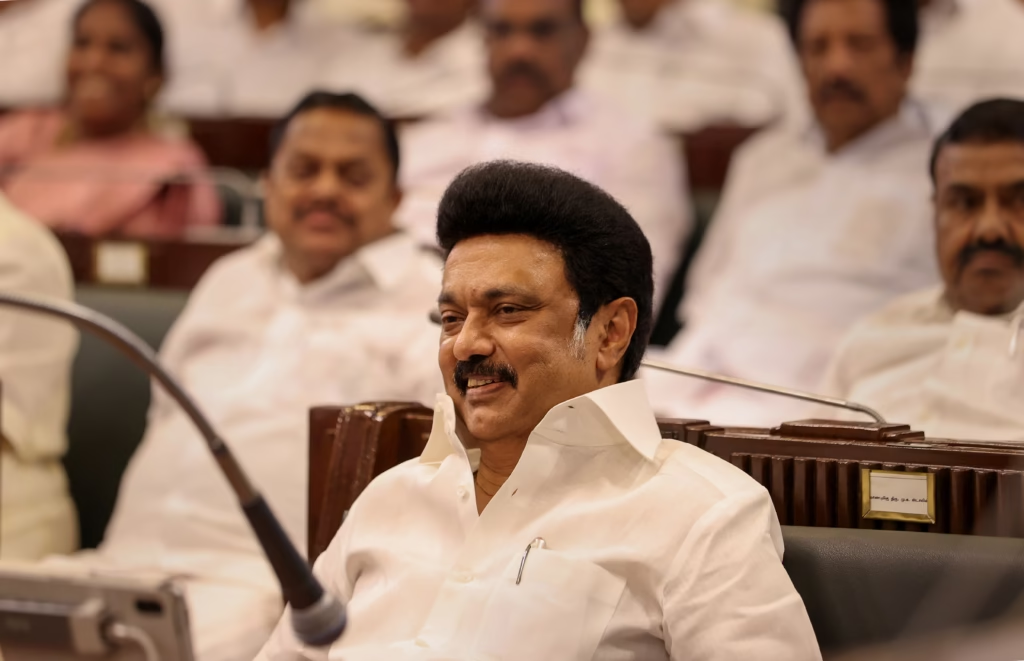
A campaign song released by the ruling Dravida Munnetra Kazhagam (DMK) ‘Stalin Thodarattum, Tamil Nadu Vellattum’ (Let Stalin continue, let Tamil Nadu triumph), has taken aim at the Bharatiya Janata Party (BJP) while pitching Chief Minister M.K. Stalin’s return to office as essential for Tamil Nadu’s “progress and victory”, even as the government credited ₹5,000 each to women beneficiaries under the Kalaignar Magalir Urimai Thogai scheme, party leaders and officials said on Thursday.
The song, circulated across social media platforms and party channels, forms part of the DMK’s early election outreach and highlights the government’s welfare measures and development initiatives over the past term. In its lyrics and visuals, the campaign track criticises the BJP’s policies and governance model, contrasting them with the DMK’s social justice plank and welfare-oriented programmes in Tamil Nadu.
Party leaders said the song underscores the need for “continuity in governance” and projects Stalin as the leader who can secure Tamil Nadu’s interests in a competitive federal environment. The track also features imagery of welfare schemes, infrastructure works, and public meetings, with lines suggesting that the state’s “victory” depends on Stalin returning as chief minister.
Senior DMK functionaries said the campaign material is aimed at energising cadres and reinforcing the party’s narrative ahead of the next Assembly election cycle. “The song reflects the sentiments of the cadre and the people who have benefited from the government’s schemes. It highlights what has been achieved and what needs to continue,” a party leader said.
The BJP’s Tamil Nadu unit, meanwhile, criticised the song, calling it “divisive” and accusing the ruling party of using public resources for political messaging. BJP leaders said the state government should focus on governance rather than political campaigns and asserted that voters would evaluate the performance of all parties in due course.
In a parallel development, the Tamil Nadu government credited ₹5,000 each to women beneficiaries enrolled in a state welfare programme, officials said. The transfer was carried out through direct benefit transfer (DBT) into the bank accounts of eligible women across districts.
Chief Minister Stalin said the financial assistance was intended to support women and families and reaffirm the government’s commitment to welfare and social equity. In a statement, he said the scheme reflects the administration’s focus on empowering women and strengthening household finances.
“Women have been at the centre of our governance model. This assistance is part of our broader effort to ensure financial security and dignity for families across Tamil Nadu,” Stalin said, adding that the government would continue to expand welfare initiatives based on need and feedback from the public.
Officials said the disbursement covered beneficiaries under an existing state scheme aimed at supporting women heads of households and economically vulnerable groups. The amount was credited in a single tranche to provide immediate relief and assistance.
The opposition has questioned the timing of the transfer, alleging that welfare disbursements are being highlighted alongside political messaging. DMK leaders, however, rejected the criticism, saying the scheme was part of ongoing government policy and not linked to any specific political event.
Political observers noted that the release of campaign material and the highlighting of welfare measures often occur simultaneously as parties seek to shape narratives ahead of elections. In Tamil Nadu, where welfare schemes and political messaging frequently intersect, such developments are expected to intensify as the electoral calendar approaches.
The DMK has emphasised its record on social welfare, infrastructure, and state rights, while the BJP has sought to expand its footprint in the state by focusing on governance, central schemes, and alliances. Both parties have begun ramping up their communication strategies through digital platforms and grassroots outreach.
With the campaign song gaining traction online and the welfare transfer reaching beneficiaries across Tamil Nadu, the political discourse in the state is set to sharpen in the coming months. Party leaders on both sides said they would continue to engage with voters through public meetings, digital campaigns, and policy announcements as they prepare for future electoral contests.
About the Author