A Cup of Tea in the House of Noise
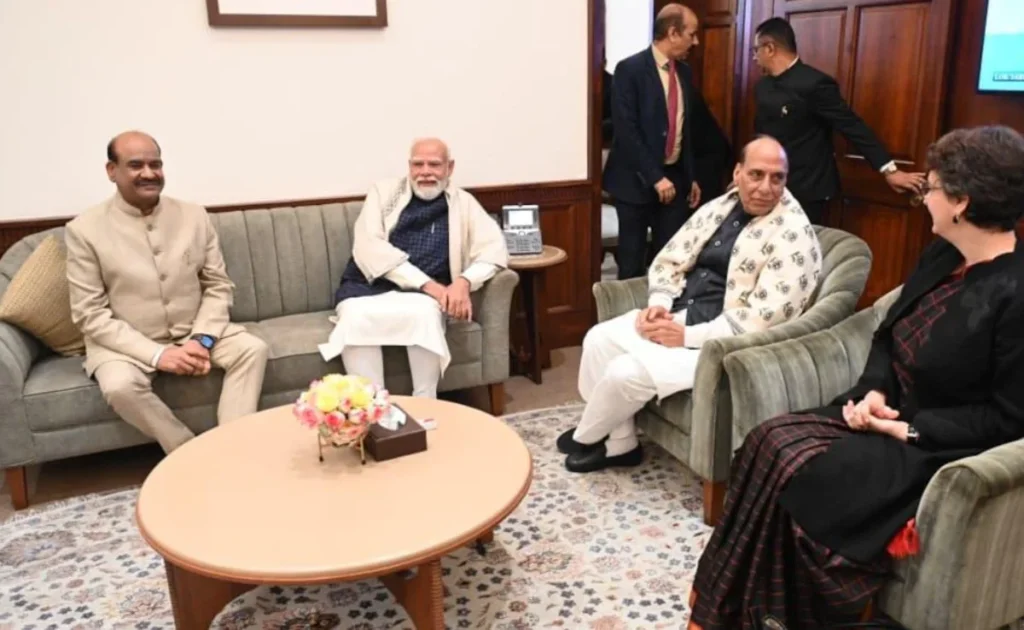
Parliament is rarely associated with quiet moments. It is a theatre of raised voices, thumping desks, walkouts, and words sharpened by ideology. Yet, every once in a while, a fleeting image cuts through the noise and lingers longer than a heated debate. Imagine, then, a symbolic tea party no china cups laid out on Central Vista lawns, no cameras invited just a metaphorical cup of tea shared across the aisle between Prime Minister Narendra Modi and Congress leader Priyanka Gandhi Vadra.
Such an image is not about agreement. It is about acknowledgment. It is about the possibility that politics, even in its most adversarial form, can pause long enough to recognise the humanity on the other side.
Tea, after all, holds a special place in India’s political imagination. For Narendra Modi, it is part of his personal and political narrative the chaiwala who rose to the highest office in the land. For millions of Indians, tea is the great leveller, shared at railway platforms, village chaupals, newsroom desks, and family kitchens. It is where conversations begin, tempers cool, and silences speak.
In today’s Parliament, silence is rare.
Narendra Modi enters the House with the confidence of a leader who has shaped Indian politics for over a decade. His authority is visible, his words deliberate, his presence commanding. Across the aisle stands Priyanka Gandhi Vadra, relatively newer to parliamentary politics but carrying a legacy that predates the Prime Minister’s public life. Her speeches are emotional, her tone confrontational at times, but rooted in an attempt to reclaim political space for an opposition struggling to be heard.
They represent more than parties. They represent two political imaginations.
Modi’s politics is built on centralised leadership, narrative control, and the projection of decisiveness. Priyanka Gandhi’s political persona draws from empathy, grassroots imagery, and the language of resistance. When they speak in Parliament, they are not just addressing each other they are addressing the country, their supporters, and history itself.
The metaphorical tea between them, therefore, is not warm with consensus. It is warm with tension.
One can imagine Modi holding the cup steadily, listening with half a smile that conceals calculation. Priyanka Gandhi, stirring her tea perhaps a bit too fast, speaking of injustice, rising prices, and unheard voices. The conversation would not be polite small talk. It would be sharp, layered, and unfinished.
Yet, even such a conversation would be valuable.
Indian democracy thrives not merely on electoral victories but on institutional dialogue. Parliament is meant to be the space where disagreement is not just allowed but respected. In recent years, however, the House has increasingly mirrored the polarisation outside it. Dialogue is replaced by disruption, debate by declarations.
A symbolic tea party reminds us of what is missing.
For the Prime Minister, engaging with opposition voices like Priyanka Gandhi is not a sign of weakness. It is a reaffirmation of confidence. Authority that listens strengthens itself. Leadership that acknowledges dissent gains legitimacy beyond numbers.
For Priyanka Gandhi, engaging Modi is not about softening opposition. It is about sharpening it with substance. Opposition is most effective when it is heard, not just loud. A conversation even a symbolic one forces both sides to confront the other’s worldview rather than perform for their respective galleries.
Critics will scoff at such imagery. They will say politics is not a tea party. And they are right. Politics is conflict, competition, and consequence. But politics is also process. It is about institutions surviving personalities, and norms outlasting tempers.
India’s parliamentary history is full of fierce rivals who shared civility outside the well of the House. Atal Bihari Vajpayee and Indira Gandhi disagreed deeply, yet respected each other’s commitment to the nation. Their battles were ideological, not personal. The language was sharp, but the intent was anchored in democratic continuity.
Today’s politics often blurs that line.
The Modi–Priyanka dynamic is especially symbolic because it carries the weight of narrative. Modi embodies the disruption of old elites; Priyanka represents the persistence of dynastic politics attempting reinvention. Their exchange real or imagined captures India’s ongoing argument with itself: change versus continuity, power versus protest, governance versus grievance.
The tea grows cold quickly in such conversations.
But even a cold cup leaves a taste.
For citizens watching Parliament from their homes, the idea of leaders acknowledging each other matters. It signals that disagreement does not equal delegitimisation. That opposing someone’s politics does not require denying their right to speak. That democracy is not a zero-sum shouting match.
The real tragedy of modern parliamentary politics is not anger it is indifference. Walkouts replace arguments, slogans replace sentences, and the House empties when it should be most alive. In that vacuum, public faith erodes.
A symbolic tea party is, therefore, not about romance. It is about responsibility.
It reminds those in power that strength lies not just in winning votes but in sustaining institutions. It reminds the opposition that resistance must evolve into readiness to govern, to persuade, to listen as much as it speaks.
When the session ends and microphones are switched off, Parliament returns to being a building of stone and paper. But the ideas exchanged within it linger. Whether through confrontation or conversation, leaders shape not just laws but political culture.
India does not need its leaders to agree over tea. It needs them to stay at the table.
In a House full of noise, perhaps the most radical act is not shouting louder but pausing long enough to sip, listen, and respond.
Even if the tea is bitter.
About the Author