Ayatollah Ali Khamenei, Long-Time Supreme Leader of Iran, Dies at 87
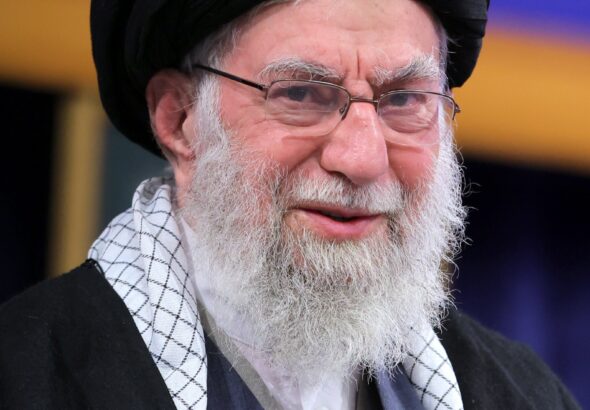
Ayatollah Ali Hosseini Khamenei, the dominant figure in the Islamic Republic of Iran for more than three decades, died today, Iranian state media confirmed. His death marks the end of an era in which his interpretation of Iran’s revolutionary ideology shaped both domestic governance and foreign policy.
Iran’s Supreme Leader since 1989, Khamenei was 87 and had been Iran’s foremost political and religious authority since the death of his predecessor. He passed away amid mounting tensions between Tehran and several Western governments a period marked by sanctions, regional confrontations, and internal unrest.
Early Life and Religious Education
Khamenei was born on April 19, 1939, in the northeastern Iranian city of Mashhad into a religious family. From a young age, he was immersed in Shiʿite Islamic study. As a teenager and young adult, he moved to Qom, Iran’s chief seminarian center, where he studied theology and jurisprudence under senior clerics.
During the 1950s and 1960s, Khamenei developed a reputation among peers as a diligent student of Islamic law and philosophy. At the same time, he became increasingly engaged in political discussions opposing the secularizing and pro-Western policies of the Shah’s government.
Revolutionary Years and Rise in Politics
In the late 1960s and 1970s, Khamenei’s activism against the ruling monarchy intensified. He aligned closely with Ayatollah Ruhollah Khomeini, who was emerging as the chief critic of the Shah. Khamenei was arrested multiple times by the Shah’s security services for his involvement in anti-government activities. These experiences forged his credentials among revolutionary circles and strengthened his commitment to political Islam.
After the Shah fell in 1979 and the Islamic Republic was established, Khamenei quickly assumed a role in the new government. He became a member of revolutionary institutions and worked to consolidate the clerical leadership’s hold over the state.
Presidency and the Iran–Iraq War
In the early years of the republic, Khamenei transitioned into a formal political career. He was elected President of Iran in 1981, shortly after a violent assault against Iran’s leadership that left many officials dead or injured.
As President, Khamenei administered government affairs during the Iran–Iraq War (1980–1988), a brutal conflict that devastated both nations. His tenure strengthened his ties to Iran’s Revolutionary Guard and national security network. It also deepened his reputation as a leader capable of managing a country under extreme duress.
Ascension to Supreme Leadership
When Ayatollah Khomeini died in 1989, Iran’s clerical assembly charged with selecting a new leader chose Khamenei as the second Supreme Leader of the Islamic Republic. Although some in the clergy questioned whether he had the highest level of religious scholarship, his political experience and loyalty to the revolution made him the consensus choice.
As Supreme Leader, Khamenei held ultimate authority over Iran’s armed forces, judiciary, state media, and foreign policy direction. Presidents and parliaments changed over the years, but Khamenei remained the central figure in every major policy decision.
Rule, Domestic Challenges, and International Tensions
During his long rule, Khamenei oversaw both periods of relative openness and episodes of strict social and political control. Iran confronted economic hardship, widespread protests, and deep divides between reformist and conservative factions within its society.
Major protest movements including those in 2009, 2019, and 2022 challenged the government on issues ranging from election integrity to economic grievances and social freedoms. In each case, security forces acting under the Supreme Leader’s authority responded with firm crackdowns, underscoring his commitment to preserving the revolution’s core structure.
On the international stage, Khamenei’s tenure was defined by persistent confrontation with the United States and other Western governments. Prolonged disputes over Iran’s nuclear program resulted in waves of sanctions that reshaped Iran’s economy and diplomatic relationships. Tehran also expanded its influence through regional partnerships with non-state actors and allied governments across the Middle East.
Legacy and Future Uncertainties
Khamenei’s death creates a historic vacuum in Iranian politics. As the longest-serving leader since the Islamic Republic’s founding, he defined the contours of state ideology, national security strategy, and the balance of power between clergy and elected officials.
Iran’s constitution empowers a clerical body to select his successor; however, the exact process and the identity of the next Supreme Leader are likely to fuel intense debate among Iran’s ruling elite.
Internationally, governments and analysts are already speculating whether Tehran will alter its posture on foreign policy, nuclear negotiations, or regional engagement. Domestically, Iranians have expressed conflicting emotions from mourning a figure seen by supporters as defender of national sovereignty, to relief among critics who viewed his leadership as repressive.
Iran’s government has declared a period of national mourning. Ceremonies and official statements are expected throughout the country in the coming days, even as the nation faces questions about its future direction.
About the Author