A Lesson from the LPG Crisis: Now More Than Ever, India Needs a Shift to Electric Cooking
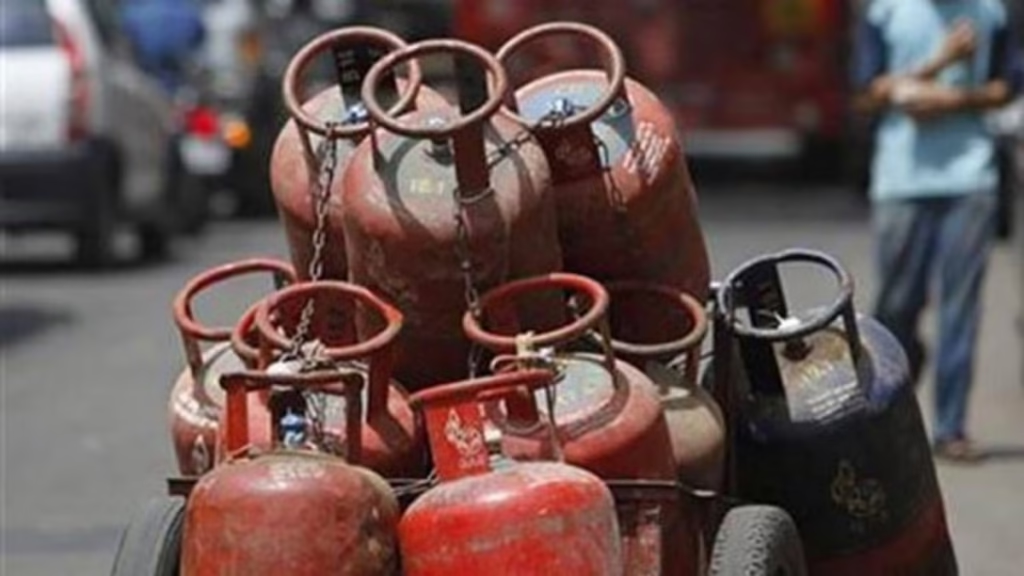
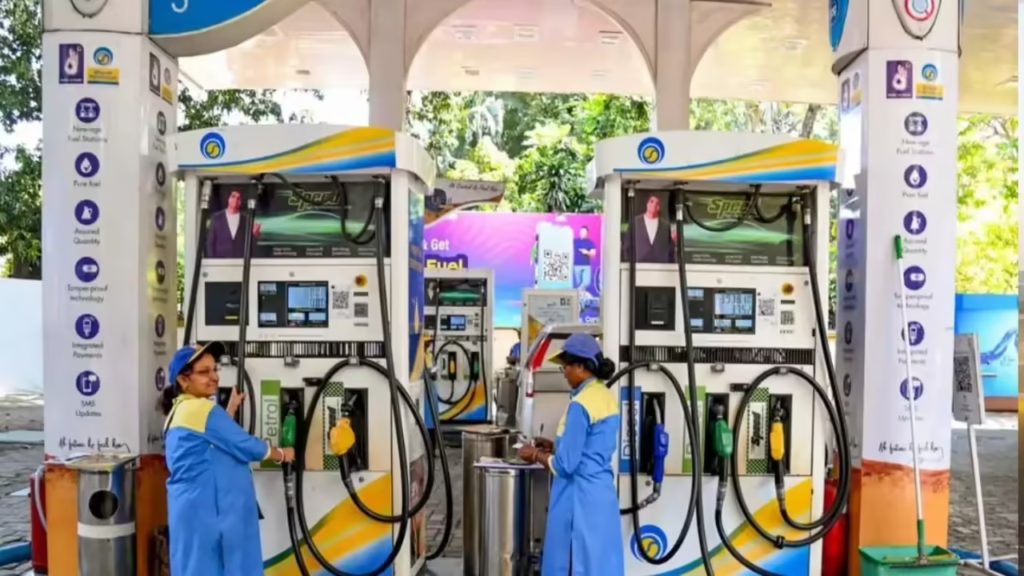
The recent stress on cooking gas supplies has once again exposed the vulnerabilities in India’s household energy ecosystem, underlining the urgent need to accelerate a transition toward electric cooking solutions. As global fuel markets remain volatile amid geopolitical tensions, policymakers and energy experts are increasingly advocating for a structural shift away from dependence on liquefied petroleum gas (LPG) toward cleaner, more reliable alternatives.
India, the world’s second-largest consumer of LPG for household cooking, has made significant strides in expanding access through flagship schemes such as the Pradhan Mantri Ujjwala Yojana. However, the current supply constraints triggered by disruptions in West Asian supply chains and rising global prices have revealed the limits of a system heavily reliant on imports.
With nearly 60 per cent of its LPG demand met through imports, India remains exposed to global price shocks. The ongoing crisis has pushed up subsidy burdens and raised concerns over affordability, especially for low-income households. Refill rates have already shown signs of stress in recent months, as higher cylinder prices discourage consumption among vulnerable sections.
In this context, experts argue that electric cooking presents a viable and sustainable alternative that can insulate households from international fuel volatility. Technologies such as induction cooktops and electric pressure cookers have matured significantly, offering efficiency, safety, and cost advantages over traditional gas-based cooking.
One of the strongest arguments for electric cooking lies in its alignment with India’s broader energy transition goals. As the country rapidly expands its renewable energy capacity targeting 500 GW of non-fossil fuel capacity by 2030 the carbon footprint of electricity is expected to decline steadily. This makes electric cooking not just an economic choice, but also an environmentally sound one.
Moreover, the expansion of reliable electricity access across rural and urban India has created a strong foundation for such a transition. Government initiatives like the Saubhagya scheme have ensured near-universal electrification, reducing one of the major barriers that previously hindered the adoption of electric appliances.
Despite these advantages, the shift to electric cooking is not without challenges. High upfront costs of appliances, concerns over electricity reliability in certain regions, and entrenched consumer preferences continue to act as barriers. Additionally, tariff structures in some states make electricity comparatively expensive for cooking purposes, limiting its attractiveness.
To address these issues, policy interventions will be critical. Experts suggest targeted subsidies for electric cooking appliances, time-of-day electricity pricing to make cooking more affordable, and awareness campaigns to promote behavioural change. Integrating electric cooking into existing welfare schemes could also accelerate adoption among economically weaker sections.
Another key aspect is infrastructure readiness. While electrification has improved, ensuring uninterrupted power supply during peak cooking hours remains essential. Investments in grid stability and local distribution networks will be crucial to support increased electricity demand from households.
The private sector, too, has a role to play. Appliance manufacturers and energy service companies can drive innovation and reduce costs through scale. Financing models such as pay-as-you-go or instalment-based purchases could make electric cooking devices more accessible to low-income consumers.
Importantly, the transition does not necessarily mean a complete abandonment of LPG in the short term. A hybrid approach where households use a combination of LPG and electric cooking could serve as a practical pathway, gradually reducing dependence on gas while building confidence in electric alternatives.
The current LPG crisis should, therefore, be seen not merely as a temporary disruption, but as a wake-up call for systemic reform. It highlights the need for a diversified and resilient cooking energy strategy that prioritises affordability, sustainability, and energy security.
As India navigates an increasingly uncertain global energy landscape, the case for electric cooking has never been stronger. The choices made today will determine whether households remain vulnerable to future shocks or transition toward a more stable and sustainable energy future.
In the long run, shifting kitchens from gas flames to electric heat may prove to be one of the most impactful steps in India’s clean energy journey.
About the Author