India Has Adequate Petrol and Diesel Stocks, Government Reassures Amid West Asia Concerns

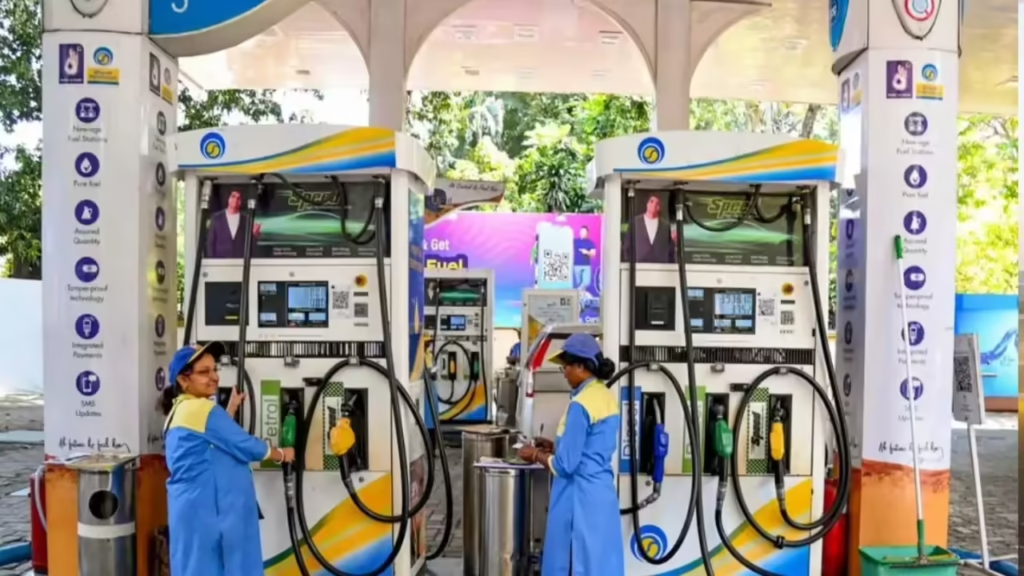
The Government of India on Tuesday sought to allay public concerns over fuel availability, asserting that the country has sufficient stocks of petrol and diesel despite ongoing geopolitical tensions in West Asia that have disrupted global energy supply chains.
In an official statement, the Ministry of Petroleum and Natural Gas said that India’s fuel reserves remain stable and there is no immediate cause for concern. Authorities emphasised that supply lines are being closely monitored and contingency measures are in place to address any potential disruptions.
The reassurance comes amid heightened anxiety over maritime security in the Strait of Hormuz, a critical global oil transit chokepoint through which a significant portion of the world’s crude oil and liquefied petroleum gas (LPG) supplies pass. Recent tensions in the region had raised fears of delays in shipments and possible shortages.
Officials confirmed that key consignments destined for India are proceeding as scheduled. “Jag Vasant and Pine Gas safely crossed the Strait of Hormuz. Pine Gas is carrying 45,000 metric tonnes of LPG and is expected to reach New Mangalore Port early morning on March 27,” a Special Secretary from the Ministry of Ports, Shipping and Waterways said.
The successful passage of these vessels is being seen as a positive signal for the continuity of energy supplies. Industry experts noted that uninterrupted movement through the Strait is crucial for India, which imports a majority of its crude oil requirements.
Government sources further indicated that oil marketing companies (OMCs) have maintained adequate buffer stocks across the country. These reserves are designed to cushion short-term disruptions and ensure uninterrupted supply to consumers, including transport, agriculture, and industrial sectors.
In addition to petrol and diesel, the government is also keeping a close watch on LPG availability, particularly given its importance for domestic consumption. Officials said that distribution networks remain fully functional and there is no indication of supply stress at present.
India has, in recent years, diversified its crude sourcing strategy to reduce dependence on any single region. This has helped mitigate risks arising from geopolitical volatility. Strategic petroleum reserves and long-term contracts with multiple supplier nations have further strengthened the country’s energy security framework.
Meanwhile, the government has urged citizens not to engage in panic buying, stressing that such behaviour could create artificial shortages. “There is no need for concern. Supplies are steady and sufficient to meet demand,” an official statement noted.
Market analysts pointed out that while global oil prices may remain volatile due to external factors, domestic availability of fuels is unlikely to be immediately affected. However, they cautioned that prolonged instability in key shipping routes could have downstream effects if not managed carefully.
The Centre reiterated its commitment to ensuring energy security and maintaining price stability. Ministries concerned are in constant coordination to assess developments and take timely action if required.
As tensions in West Asia continue to evolve, the government’s assurance aims to maintain public confidence and prevent disruption in daily life. For now, officials maintain that India’s fuel supply chain remains robust and resilient.
About the Author