Did Israel Underestimate Iran’s Military Strength? Strikes Near Dimona Raise Questions Over Defence Doctrine
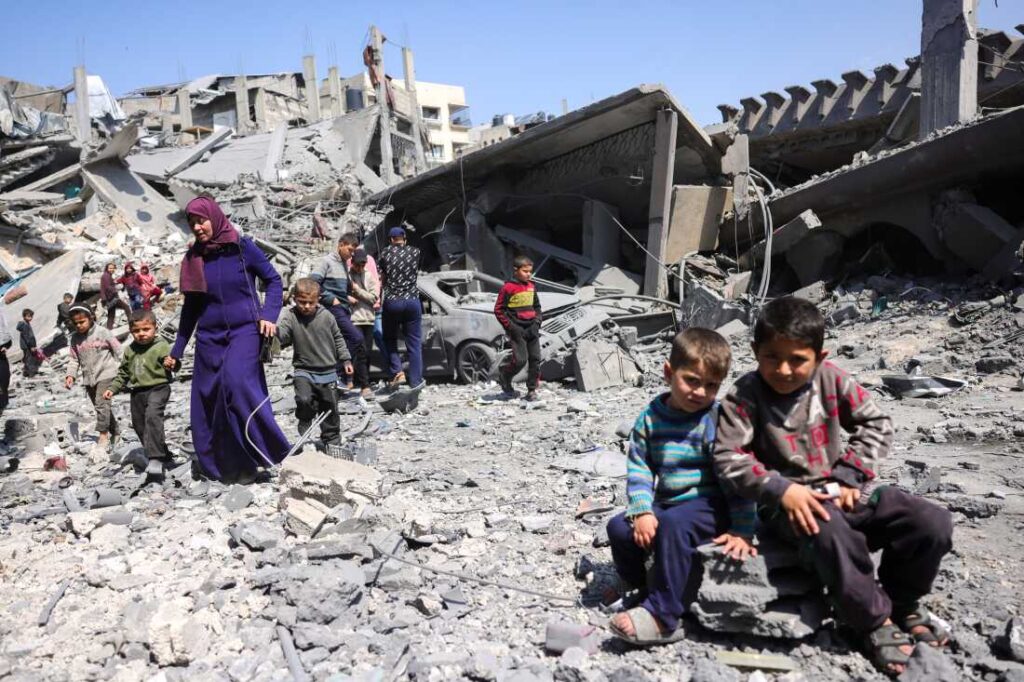
A fresh wave of Iranian strikes targeting southern Israel, including areas around Arad and the sensitive Dimona region, has triggered renewed scrutiny of Israel’s military preparedness. The attacks, which came perilously close to one of the country’s most closely guarded nuclear-linked facilities, have raised a central question: has Israel underestimated both the scale and sophistication of Iran’s evolving arsenal?
While Israeli authorities have stressed that key strategic assets remain secure, the ability of multiple projectiles to penetrate layered air defence systems marks a significant moment in the ongoing confrontation.
A Strike That Carries Strategic Significance
Dimona is widely regarded as the heart of Israel’s nuclear programme, even though the country maintains a policy of deliberate ambiguity regarding its capabilities. Any attack in its vicinity carries symbolic weight far beyond immediate physical damage.
The recent strikes appear designed not just to inflict casualties but to send a strategic signal demonstrating that Iran can reach highly sensitive zones despite Israel’s advanced defensive shield.
Security experts say even near-misses in such locations can have outsized geopolitical consequences, potentially shifting deterrence dynamics across the region.
Cracks in a Multi-Layered Defence?
Israel’s air defence network is among the most sophisticated in the world, built around a tiered system:
- Iron Dome for short-range rockets
- David’s Sling for medium-range threats
- Arrow systems for long-range ballistic missiles
However, no system is designed to be impenetrable. The recent attacks suggest that Iran may be exploiting a known vulnerability: volume saturation. By launching multiple threats simultaneously, an adversary can overwhelm interception capacity, forcing difficult prioritisation decisions in real time.
Defence analysts note that even a small percentage of missiles getting through can have significant psychological and strategic impact.
What Weapons Is Iran Using?
Iran’s approach combines different categories of weapons into coordinated strike packages, making defence more complex.
Ballistic Missiles
Ballistic missiles remain the backbone of Iran’s long-range strike capability. These weapons travel at extremely high speeds and follow steep trajectories, making them difficult to intercept.
Iran’s arsenal includes:
- Short and medium range missiles capable of reaching Israel
- Warheads designed for high explosive impact
- Increasing use of improved guidance systems for better accuracy
These missiles are particularly effective against fixed targets such as infrastructure and military installations.
Cruise Missiles
Unlike ballistic missiles, cruise missiles fly at lower altitudes and can manoeuvre mid-flight, allowing them to evade radar detection more easily.
Their key features include:
- Terrain-hugging flight paths
- Greater precision targeting
- Ability to approach from unexpected directions
This makes them useful for striking defended or strategically important areas.
Unmanned Aerial Vehicles (Drones)
Iran has invested heavily in drone warfare, using unmanned systems both for reconnaissance and attack.
Key characteristics:
- Long-range loitering munitions that can hover before striking
- Lower cost compared to traditional missiles
- Capability to be launched in large numbers simultaneously
These drones are often used in the first wave of an attack to distract and overload air defence systems, paving the way for more destructive follow-up strikes.
Combined “Saturation” Strategy
What distinguishes recent Iranian operations is the integration of these systems into a single coordinated assault:
- Initial drone swarms to stretch defensive coverage
- Cruise missiles to exploit gaps
- Ballistic missiles to deliver heavy payloads
This layered approach increases the probability that at least some weapons will bypass defences.
Where Israel May Have Miscalculated
The latest developments point to several possible strategic misjudgements:
Underestimating Scale and Sustainability
Israel has previously targeted Iranian military infrastructure, including missile launch sites. However, Iran appears to retain significant launch capacity, suggesting a dispersed and resilient network that is difficult to neutralise.
Overreliance on Interception Rates
High interception success in earlier engagements may have created confidence in the system’s reliability. But sustained, high-volume attacks test not just technology, but also logistics such as interceptor stockpiles and response time.
Shifting Nature of Warfare
Iran’s doctrine emphasises asymmetric warfare, relying on cost-effective tools like drones and mass-produced missiles. This approach challenges traditional military advantages by turning conflicts into prolonged contests of endurance rather than short, decisive engagements.
A War of Economics as Much as Technology
One of the most significant aspects of the current confrontation is cost imbalance:
- Interceptor missiles used by Israel are extremely expensive
- Iranian drones and some missiles are comparatively cheap
This creates a scenario where defending against attacks can be far more costly than launching them a dynamic that could shape long-term strategy on both sides.
Conclusion
The strikes near Arad and Dimona do not necessarily indicate a collapse of Israel’s defence systems, but they do highlight their limits under sustained pressure. More importantly, they underscore how Iran’s military capabilities particularly in missile and drone warfare have evolved in ways that complicate even the most advanced defensive frameworks.
Whether this amounts to a clear miscalculation or simply a changing battlefield reality, one conclusion is evident: the strategic balance between Israel and Iran is entering a more volatile and uncertain phase, where deterrence is being tested not just by power, but by persistence and adaptability.
About the Author